
Your cart
There are no more items in your cart
- Tips and tricks
- 2 likes
- 5645 views
- 0 comments


Last items in stock

$186.41
<
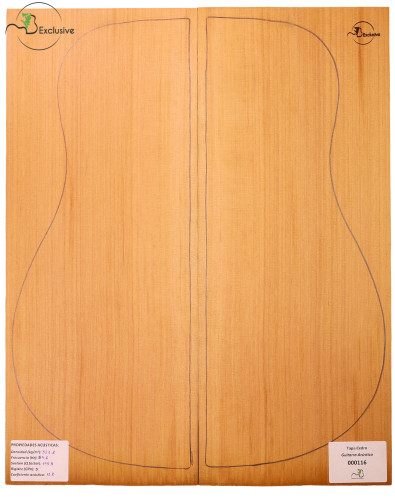
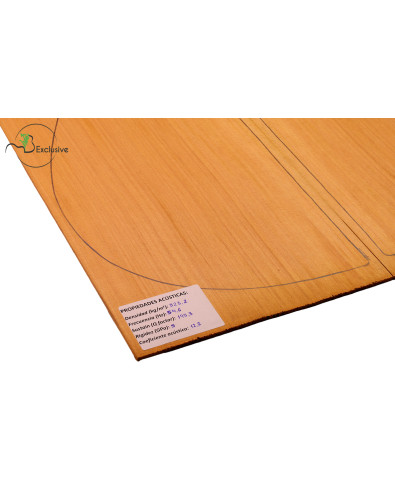
Red Cedar Top MB Exclusive 000116 Features:
Dimensions: (545x220x4mm)x2
Botanical name: Thuja plicata
Origin: Canada
Year: 1994
Density: 323,2Kg/m3
Stiffness / Young's Modulus: 5Gpa
Resonance Frequency: 54,6Hz
Sustain (Q Factor): 195,3
Acoustic Radiation Coefficient: 12,2
Density (Kg/m3): The mass of an object divided by its volume....
Last items in stock
Malaysian Blackwood
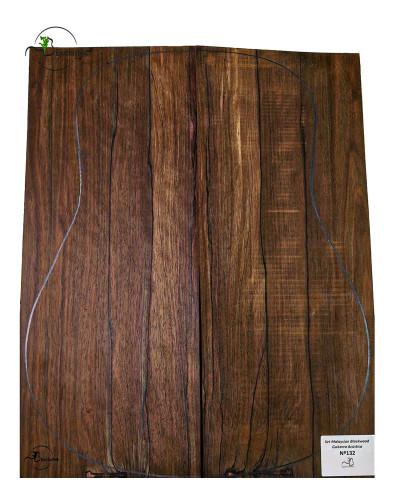
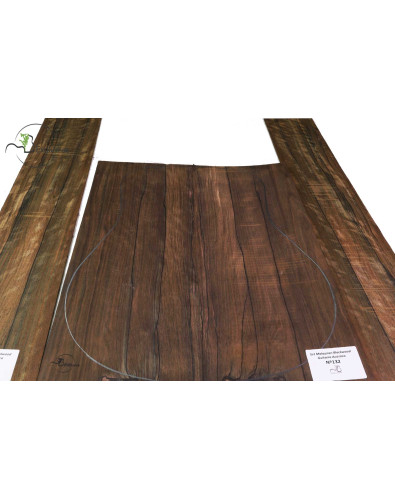
Malaysian Blackwood Set Nº132 Acoustic Guitar MB Exclusive
MB Exclusive
14641 y 14642
$472.55
Overview Malaysian Blackwood Set Nº132 Acoustic Guitar MB Exclusive:
Malaysian Blackwood is one of our favourite woods for its many aesthetic and acoustic qualities. For a number of guitar makers it is the future of guitar making, ranking it on a par with the legendary Brazilian Rosewood. These unique sets represent the most exclusive selection in an...

$9.89
Wax-free Ruby Shellac 100 g
Ruby dewaxed shellac is a solid natural resin of animal origin, obtained from the secretion of the Kerria lacca insect. It comes in the form of deep dark red flakes, resulting from a purification process that removes natural waxes.
Highly valued in lutherie for its ability to provide a deep, warm, and glossy finish, enhancing...
Out-of-Stock
$12.00
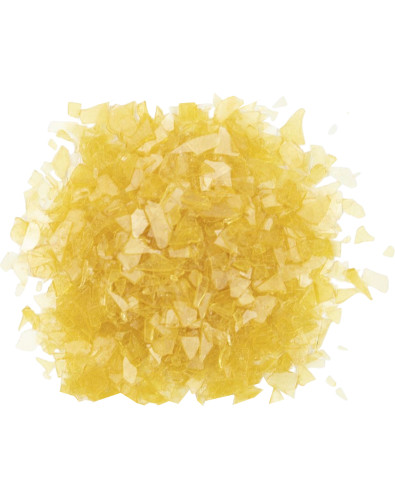
Wax-free Very Light Shellac 100 g
Extra pale dewaxed shellac is a solid natural resin of animal origin, obtained from the secretion of the Kerria lacca insect. It comes in the form of very pale yellow flakes, resulting from a bleaching and dewaxing process.
Due to its high purity and transparency, it is especially suitable for preparing fine varnishes...
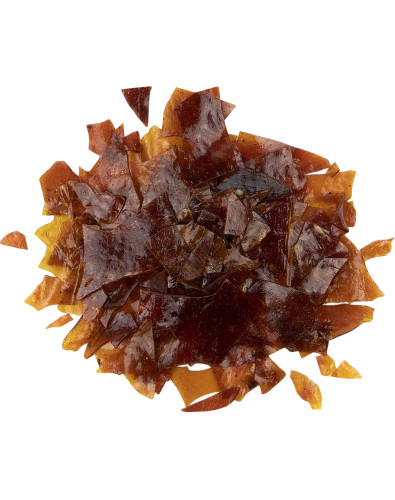
$8.39
Indian Flakes Lemon 1 Shellac 100 g
Lemon 1 shellac flakes are a solid natural resin of animal origin, obtained from the secretion of the Kerria lacca insect. They come in the form of dark amber-colored flakes and contain natural wax.
Widely used in the preparation of varnishes for musical instruments, especially in the lutherie of bowed string...
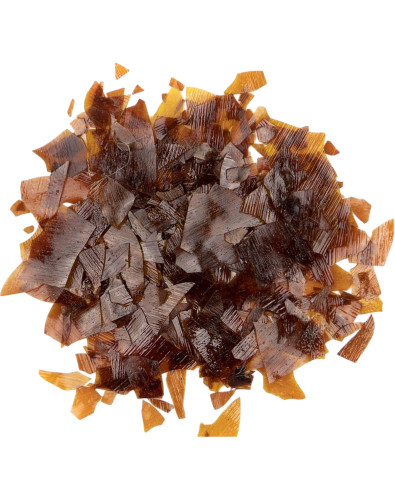
$7.77
Indian Flakes Orange Shellac 100 g
Orange shellac flakes are a solid natural resin of animal origin, obtained from the secretion of the Kerria lacca insect. They come in the form of dark amber-colored flakes and contain natural wax.
Widely used in the preparation of varnishes for musical instruments, especially in the lutherie of bowed string...
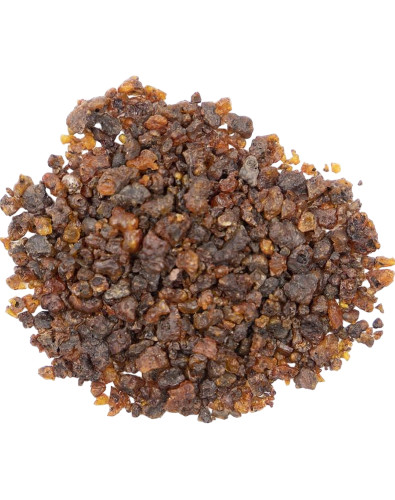
$9.89
Seed Lac Crude Shellac 100 g
Seed lac is a solid natural resin of animal origin, obtained from the secretion of the Kerria lacca insect. This form of shellac has been partially purified, removing some impurities present in stick lac, and is presented in small granules ranging from amber to brown in color.
It is especially valued in the preparation of...

$10.38
Wax-free Shellac 100 g
Wax-free Shellac is a solid natural resin of animal origin, obtained from the secretion of the Kerria lacca insect. This product has been refined to remove wax and decolorized, and is presented in light honey-colored flakes.
Thanks to its high purity and transparency, it is especially suitable for preparing fine varnishes in...
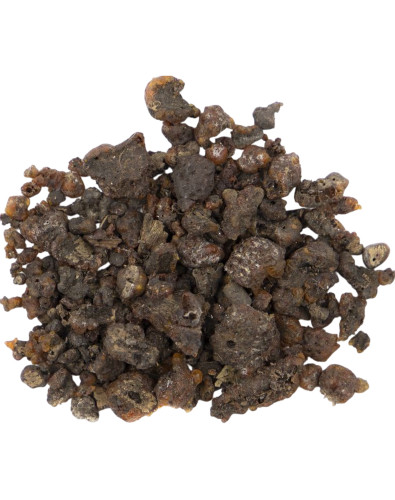
Last items in stock
$30.72
Stick-Lac Crude Shellac 100 g
Stick-Lac Crude Shellac is a solid natural resin produced by the Kerria lacca insect on tree branches in Southeast Asia. It appears as irregular fragments containing natural impurities such as plant fibers and insect residues.
This raw form of gum lac is ideal for those wishing to prepare traditional handcrafted varnishes,...

$26.86
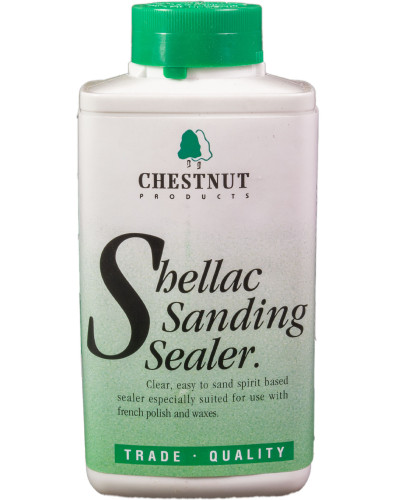
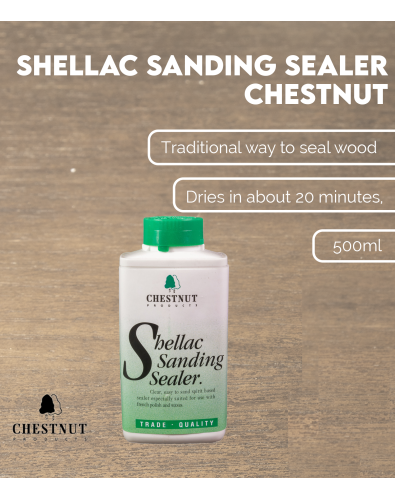
Description of Shellac Sealer 500ml Chestnut
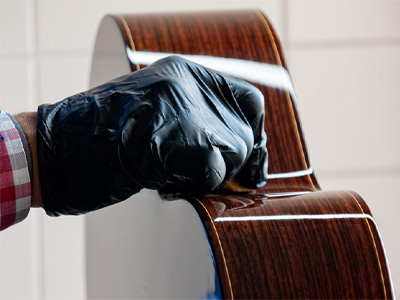
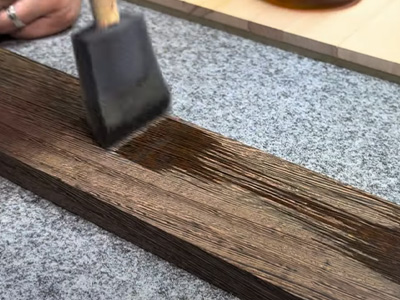
Shellac sealer is the traditional way to seal wood before applying a polish or wax.This product has a high percentage of real shellac, which means it does its job very well, dissolved in an ethanol solution for ease of application and quick drying.It can be applied with a cloth, brush or sprayer and dries in...
Comments (0)
No comments at this moment
