
Your cart
There are no more items in your cart
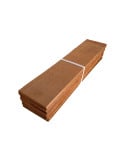
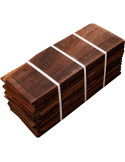
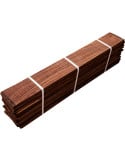
Viola
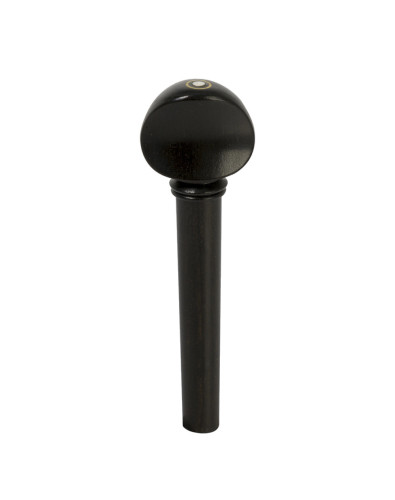

$3.30
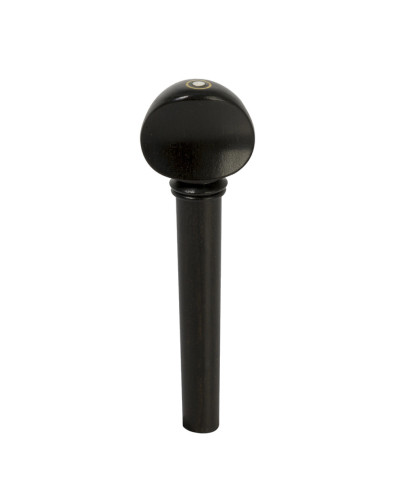
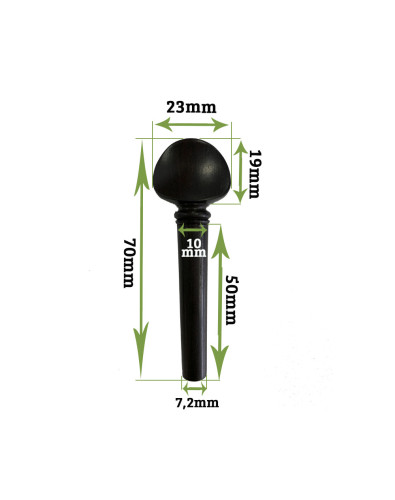
*These pegs are specially made for Viola and Violin. Check the measurements if you use them for Classical Guitar
Origin: Africa
Botanical Name: Diospyros crassiflora Hiern.
Density: 1030-1050 kg/m3
$3.30
*These pegs are specially made for Viola and Violin. Check the measurements if you use them for Classical Guitar
Origin: Africa
Botanical Name: Diospyros crassiflora Hiern.
Density: 1030-1050 kg/m3
$10.94
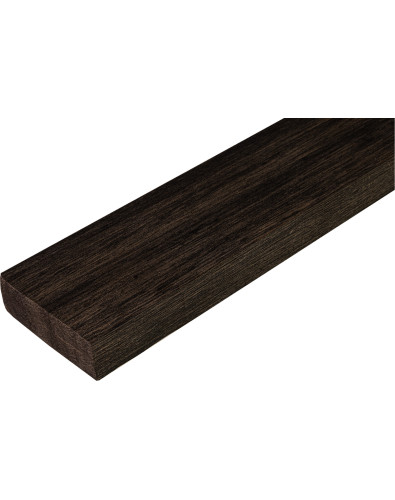
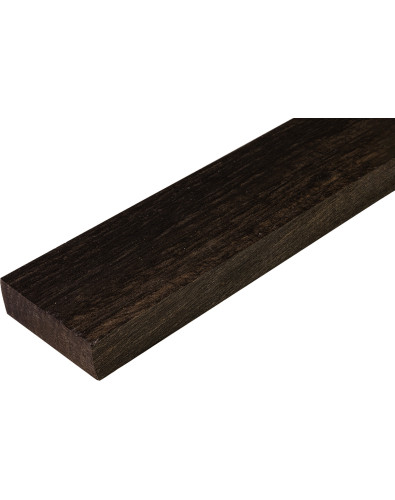
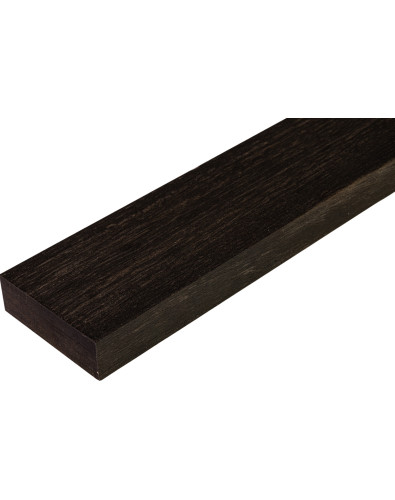
Overview A African Ebony Viola Fingerboard:
Ebony is a highly prized wood that is commonly used for bowed instruments. It is known for its exceptional hardness, durability, and smooth texture, making it an ideal choice for luthiers. One of the main advantages of ebony is its ability to withstand constant string tension and frequent playing, ensuring that...
$14.67
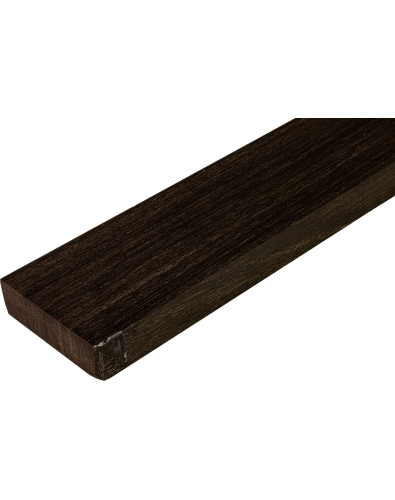
Overview AA African Ebony Viola Fingerboard:
Ebony is a highly prized wood that is commonly used for bowed instruments. It is known for its exceptional hardness, durability, and smooth texture, making it an ideal choice for luthiers. One of the main advantages of ebony is its ability to withstand constant string tension and frequent playing, ensuring...
$9.33
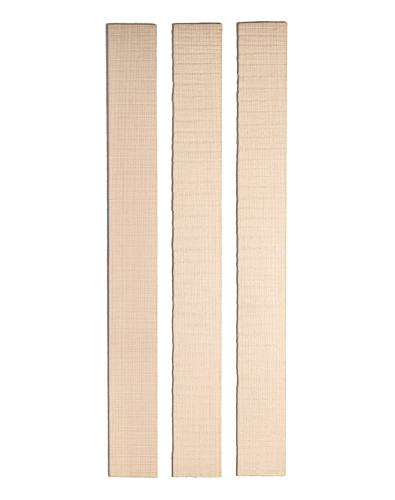
Overview A Curly Maple Viola Sides:
The maple viola ribs, as is the case with all the sides of bowed instruments, are a fundamental part of the instrument. They determine the final shape of the instrument and support its structure. The need to use a hard wood to support this tension led luthiers to choose maple. A dense wood, widely available and easy to...
$17.16
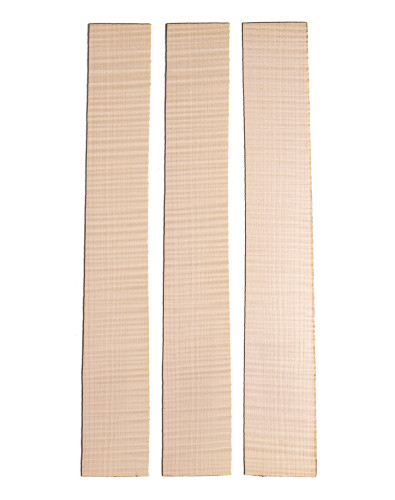
Overview AAA Curly Maple Viola Sides:
The maple viola ribs, as is the case with all the sides of bowed instruments, are a fundamental part of the instrument. They determine the final shape of the instrument and support its structure. The need to use a hard wood to support this tension led luthiers to choose maple. A dense wood, widely available and easy...
$11.19
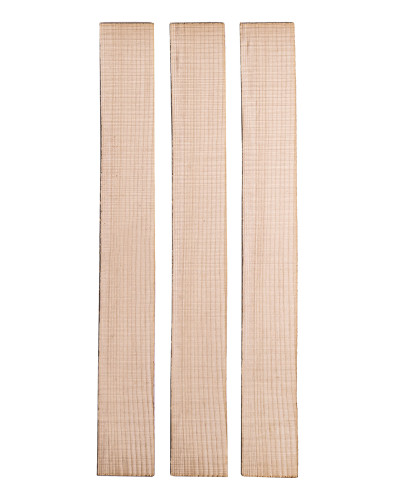
Overview AA Curly Maple Viola Sides:
The maple viola ribs, as is the case with all the sides of bowed instruments, are a fundamental part of the instrument. They determine the final shape of the instrument and support its structure. The need to use a hard wood to support this tension led luthiers to choose maple. A dense wood, widely available and easy...
$2.61
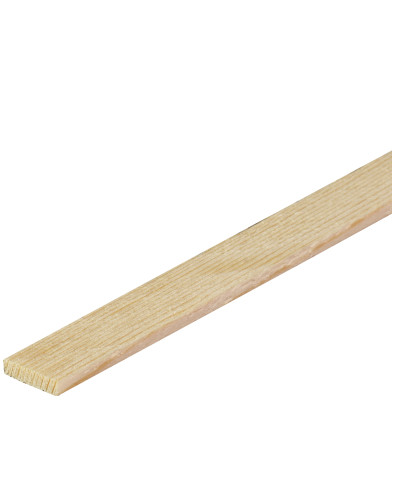
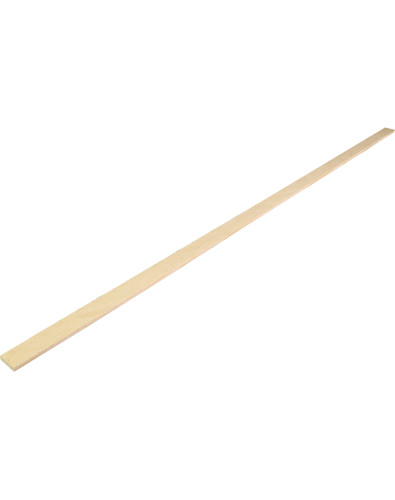
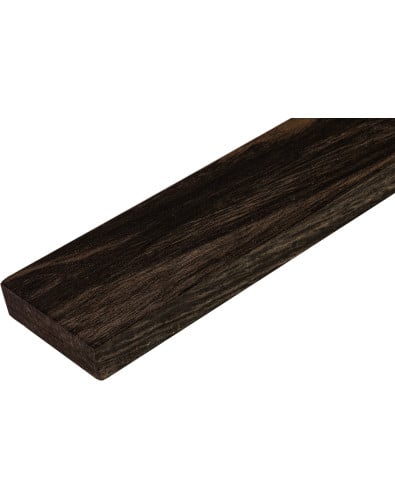
Description of the Lining Violin/Viola European Spruce
An essential element in strengthening the structure of a violin, these inner reinforcements of the sides are made of European spruce. These thin strips placed along the inside of the sides ensure a firm connection between the ribs, top and back of the violin, providing stability and preventing...
$7.46
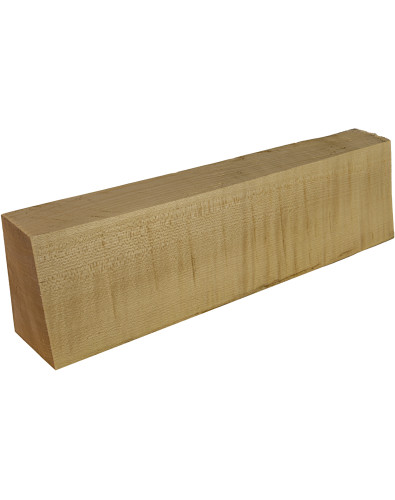
Overview B African Ebony Viola Fingerboard:
Ebony is a highly prized wood that is commonly used for bowed instruments. It is known for its exceptional hardness, durability, and smooth texture, making it an ideal choice for luthiers. One of the main advantages of ebony is its ability to withstand constant string tension and frequent playing, ensuring that...
$17.91
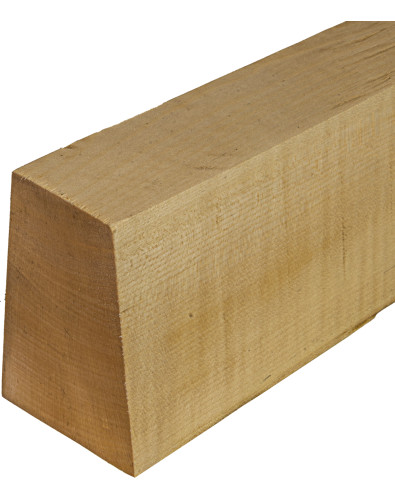
Overview AA Curly Maple Viola Neck:
Impossible not to marvel at the beauty of a curly maple viola neck. Centuries after its near-definitive design, maple is still the preferred wood of choice for necks. The reason is simple: maple is for all its qualities (physical, aesthetic, tonal) the best choice for multiple parts of the instrument. No matter what it...

$62.67
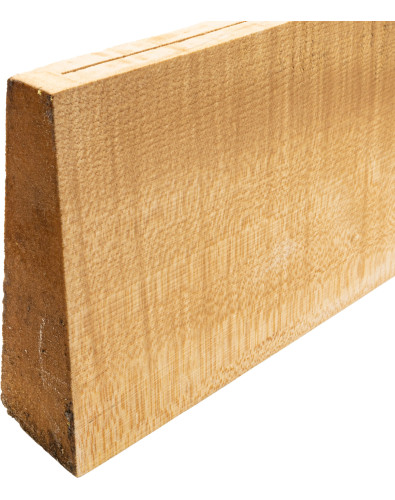
Overview AA Curly Maple Viola Backs:
Few parts of an instrument are more beautiful than a curly maple viola back. This highly prized wood has been used for centuries in bowed string instruments, virtually without exception. The reason is simple: maple is for all its properties (physical, aesthetic, tonal) the best choice for multiple parts of the...
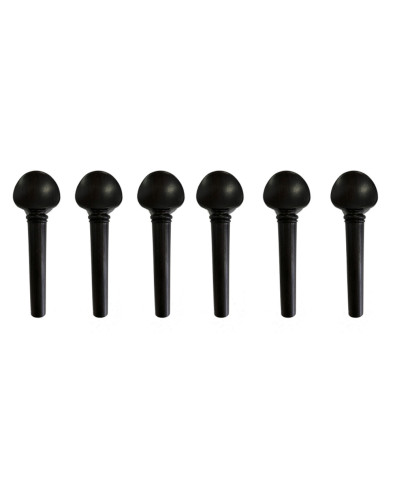
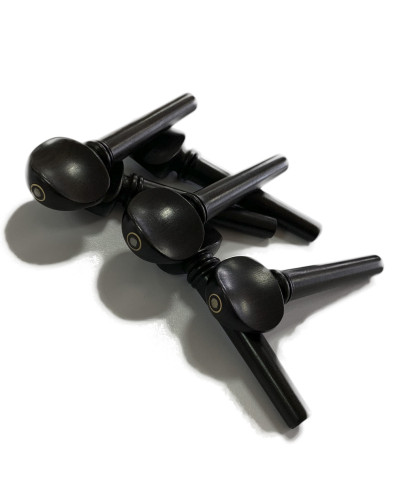
$18.40
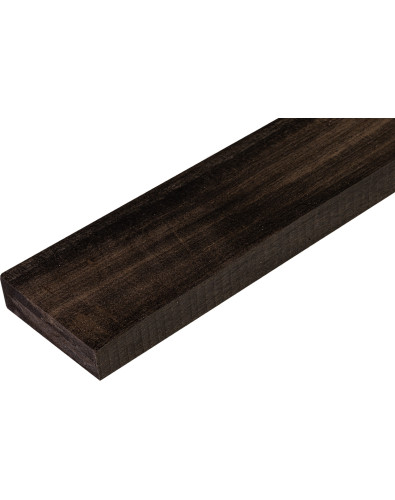
*These pegs are specially made for Viola and Violin. Check the measurements if you use them for Classical Guitar.
Origin: Africa
Botanical Name: Diospyros crassiflora Hiern.
Density: 1030-1050 kg/m3
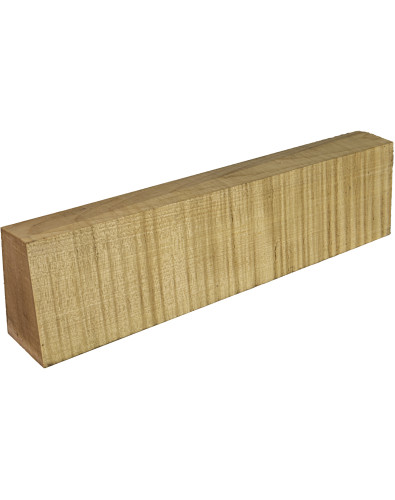
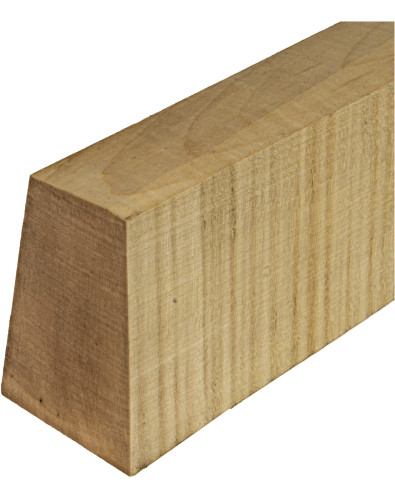
$31.83
Overview AAA Curly Maple Viola Neck:
Impossible not to marvel at the beauty of a curly maple viola neck. Centuries after its near-definitive design, maple is still the preferred wood of choice for necks. The reason is simple: maple is for all its qualities (physical, aesthetic, tonal) the best choice for multiple parts of the instrument. No matter what...
$1.87
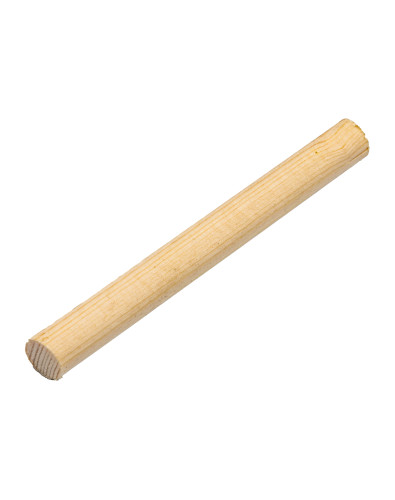
Soundpost for Viola 3/4–4/4 Length 76–78mm
The soundpost is a key component in the construction and setup of the viola. Positioned inside the interior of the soundbox, its correct placement directly affects sound transmission and the structural stability of the instrument.
The soundpost must be carefully adjusted to the interior of the soundbox,...
$2.92
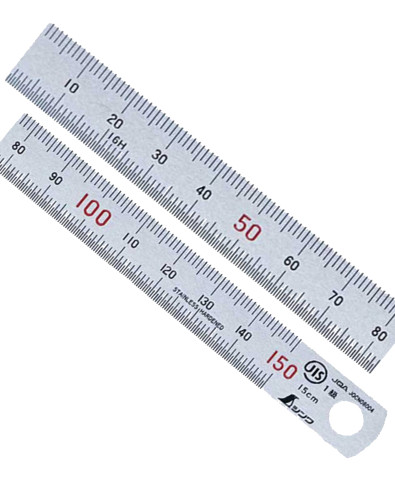
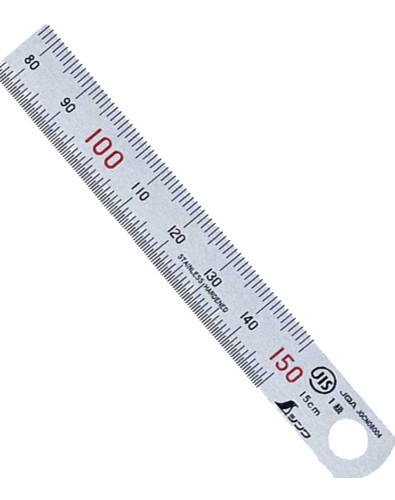
General Description of Hosco Stainless Steel Ruler 150mm
An absolute must-have rule for the builder as well as for the set-up and repair workshop. Marking cut-outs on a nut or bone saddle, making wooden cleats, etc. are all jobs where a precision ruler will come in very handy. The scale markings are engraved and chrome-plated in black. This makes it very...
$8.08
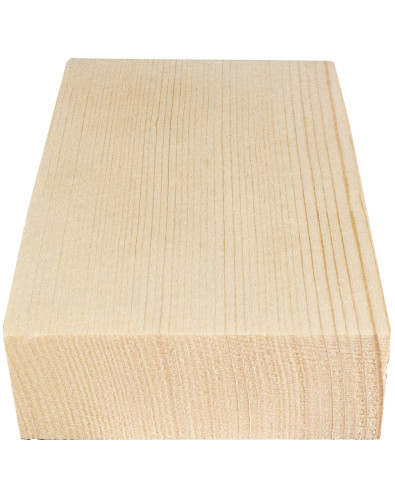
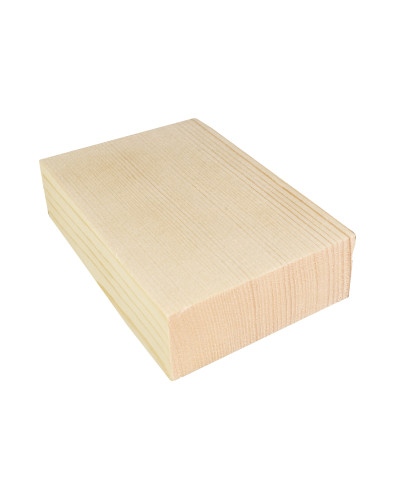
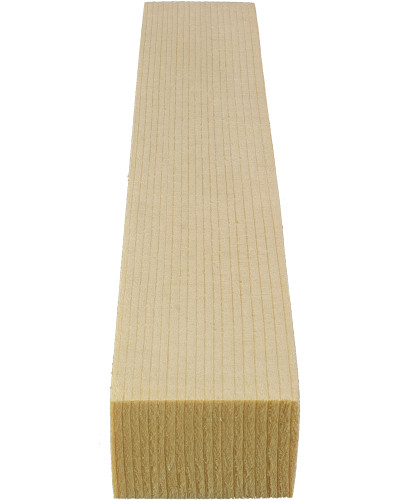
Description of Piece for 2 Upper and Lower Violin/Viola Blocks European Spruce
This European spruce piece, from which the top and bottom bout blocks of the violin or viola are cut, is essential for its characteristics: it is light, resistant and can withstand tension without deformation. Since it is square shaped and close to the required final...
$8.70
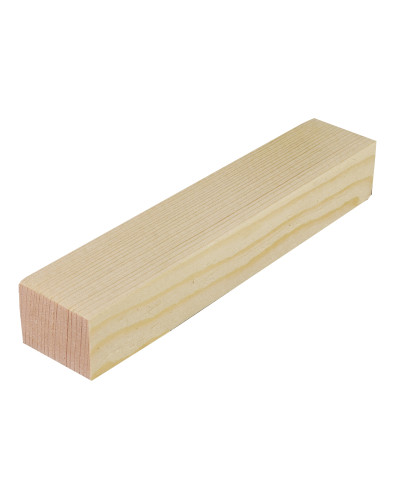
Description of the Piece for 4 Corner Blocks Violin/Viola European Spruce
This piece of European spruce from which the four corner blocks for the violin are cut is a carefully selected piece for its acoustic and structural properties. Because it is square and close to the required final dimensions, it allows for significant savings in time and effort...
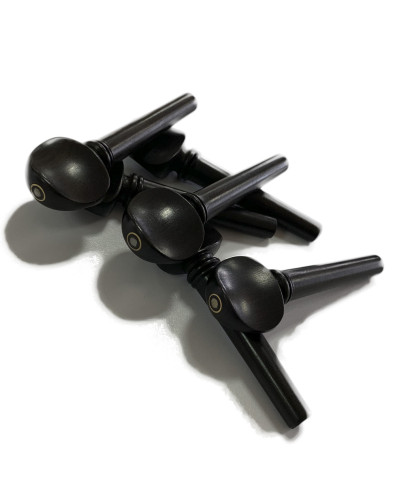
$19.77
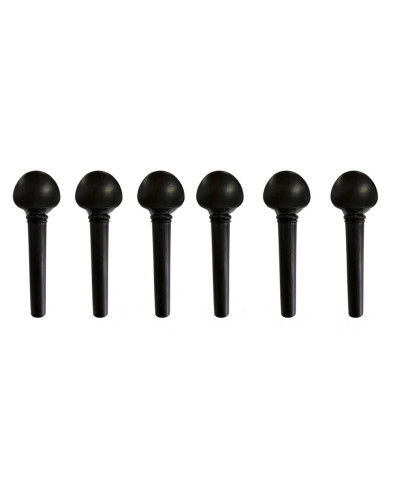
*These pegs are specially made for Viola and Violin. Check the measurements if you use them for Classical Guitar
Origin: Africa
Botanical Name: Diospyros crassiflora Hiern.
Density: 1030-1050 kg/m3
$34.07
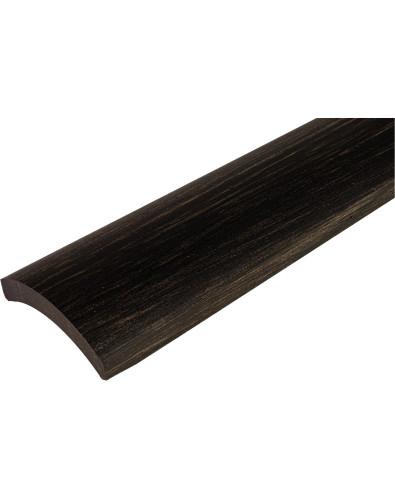
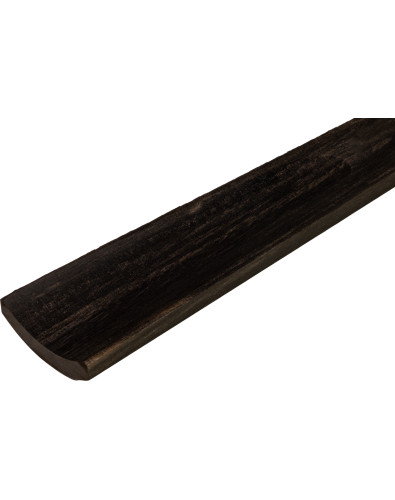
Overview A African Ebony Finished Viola Fingerboard:
Ebony is a highly prized wood that is commonly used for bowed instruments. It is known for its exceptional hardness, durability, and smooth texture, making it an ideal choice for luthiers. One of the main advantages of ebony is its ability to withstand constant string tension and frequent playing,...
$36.00
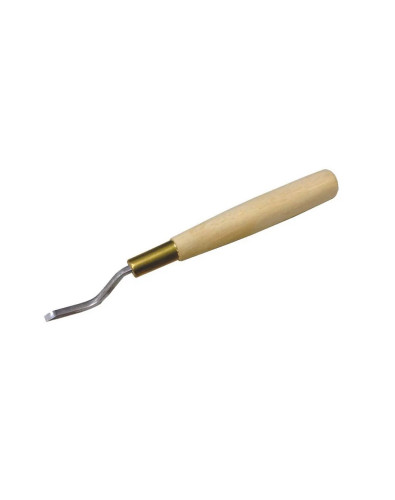
Overview Hosco Hss Micro Chisel 2.2mm:
Perfect, due to its size, for working the nut and saddle slots, the Hosco Hss Micro Chisel 2.2mm is a high-quality Japanese tool. It can also be used to remove dry glue in hard-to-reach places, to remove excess material from edges and bindings...
Características:
Width: 2.2mm
Material: High Speed Steel

$10.38
Wax-free Shellac 100 g
Wax-free Shellac is a solid natural resin of animal origin, obtained from the secretion of the Kerria lacca insect. This product has been refined to remove wax and decolorized, and is presented in light honey-colored flakes.
Thanks to its high purity and transparency, it is especially suitable for preparing fine varnishes in...
$20.52
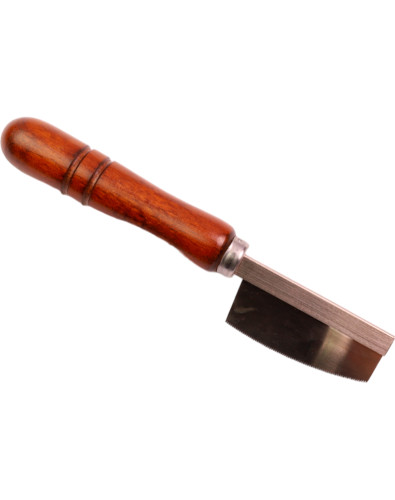
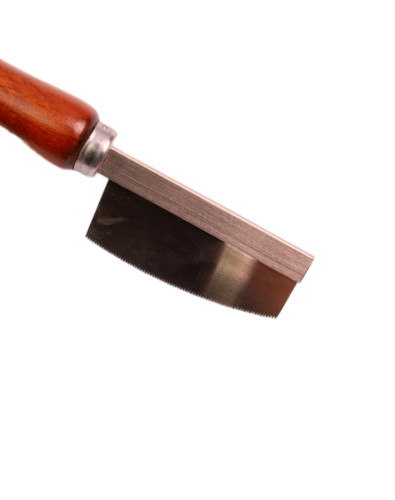
Overview of the Bracing Saw 0.2mm Hosco TL-H-RSAW
Traditional Japanese saw. This saw is specially designed to cut the braces used in the construction of most acoustic instruments. The curved blade will cut the rods with ease, even if they are glued.The Japanese saw cuts by pulling the saw backwards, traction cutting. This type of cutting greatly reduces...
$39.30
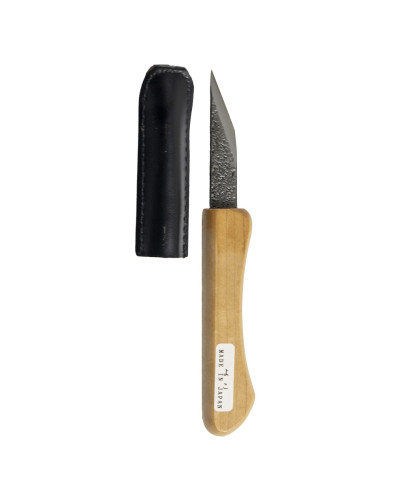
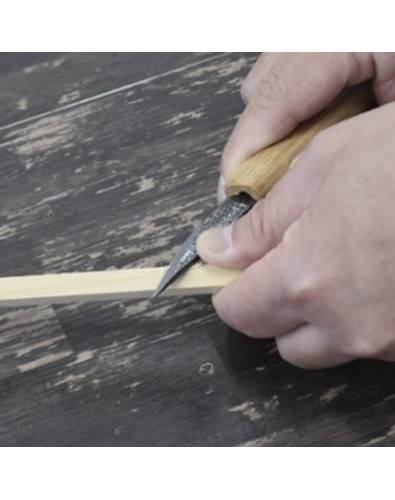
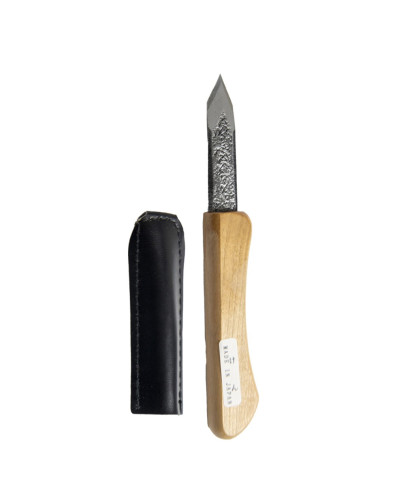
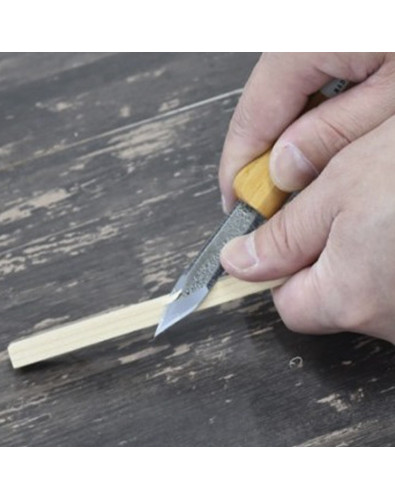
General description of the Japanese Yoko knife:
The Yoko knife uses the standard shape in carving knives. It adapts to variations of uses from wood, bamboo, paper work, to small crafts so that it can be used as a first knife. It is an ideal knife for hard to reach places such as the Zoque part of the handle.
It is made of aogami steel, also known as...
$33.58
General description of the Japanese Ken knife:
The Japanese knife "Ken", which means "broadsword" or "western sword", has two cutting edges on the left and right and is unaffected by the dominant hand, making it usable in areas with height and width limitations by switching between the left and right hand. However, the top edge of Ken is slightly more...
The viola is a string musical instrument, similar in materials and construction to the violin but larger in size and with a deeper sound. Its tessitura is situated between the bass and midrange of the violin and the high-pitched sound of the cello. The viola is considered the contralto or the dramatic tenor of the string family.
The viola that is currently used in orchestras was born between the 16th and 17th centuries with the name of viola da braccio. It has a very good timbre although with a sweetly opaque tint. It is held with the left arm in a horizontal position, just like the violin and its soundboard is supported in the same way as the violin, under the chin. It has four strings that are tuned with the notes C, G, D, A (from low to high rising in fifth intervals). For its musical reading the C key is used in third line and, when the notes are very high, the G key. Its extension is more than three octaves. Like all string instruments rubbed by the bow, natural and artificial harmonics can be used, so that their range is greater.
What are the main types of wood used in viola construction?
As with violins, maple and spruce are primarily used for violas. However, some violas incorporate exotic woods to achieve a more personalized tone.
What are the differences between the woods used for violins and violas?
Wood for violas is generally selected with slightly higher density to better support the instrument’s lower frequency range.
How does wood affect the sound projection of a viola?
The choice of wood and its drying process directly impact the harmonic response and tonal richness of the instrument.
What thickness should a viola's soundboard have?
It depends on the design and the luthier’s preferences, but it is generally slightly thicker than that of a violin to withstand string tension.
Can alternative woods be used in viola construction?
Yes, although traditional choices are still the most recommended for their acoustic properties and stability.
