
Your cart
There are no more items in your cart

All About Shellac: origin, varieties, and application techniques
Learn how to choose and apply shellac on your guitars and violins. Discover its origins and how to select the right variety for each type of wood to achieve flawless finishes.

Analyze and transform the sound of your guitar.
Would you like to gain a thorough understanding of how your guitar responds to sound? In this article, we explain how to apply Giuliano Nicoletti's method for studying the top, visualizing vibration modes, and adjusting the bracing. A practical and accessible approach to bringing acoustic research directly to your workshop.
Since 1957 growing, 68 years of learning…
This year marks our 68th anniversary sharing our passion for wood with luthiers, artisans, and craft lovers around the world. To celebrate, we don’t just want to talk about species and properties — we want to share what we’ve learned. Because each of these woods has taught us something. Some spoke to us about patience, others about adaptability, aesthetics, or listening. And all of them, without exception, have shaped us into who we are today.

The importance of good design and a solid workflow in handcrafted electric guitar building
Building an electric guitar isn’t an improvised or purely intuitive process. It’s applied design. Every millimeter gained or lost has a direct impact on the final result—on the instrument’s balance, playability, and of course, its tone.

How to choose the right string gauge based on your guitar's scale and tuning
Choosing the right string gauge is no small decision. For many musicians and luthiers, finding the ideal balance between tension, tuning, and scale can make the difference between a comfortable, resonant, and expressive instrument, and one that feels loose or difficult to play.

Learn to choose the right varnish for each wood and how to apply it
Varnishing is an essential part of building and finishing electric guitars. It not only acts as a protective barrier against external factors like humidity and temperature changes, but also enhances the natural beauty of the wood, influencing the instrument's resonance and tone.

Maderas Barber and the School of Luthiery in Paraguay: Shaping the Musicians and Luthiers of the Future
In the heart of Paraguay, in the city of Luque, an educational project is transforming the way children and young people engage with music and craftsmanship. This is the Escuela Taller de Luthería Borja, an initiative that not only teaches how to build instruments but also preserves an invaluable cultural legacy. Luz Borja, luthier and educator, shares how this school was founded and the impact it has had on the community. Along this journey, the school has received support from Maderas Barber, which has provided high-quality materials for the students.

How to properly install pegs on a violin
The adjustment and installation of pegs in bowed string instruments are fundamental processes both in their construction and maintenance. A precise adjustment not only ensures stable tuning but also contributes to the longevity of the instrument and the musician's comfort.

How to set up your own luthiery workshop at home
When we think about our workspace, tools, wood, and ongoing projects can quickly accumulate, creating chaos and distractions that affect our focus. However, workspace design is not just a matter of organization; it directly influences a luthier's creativity and productivity.
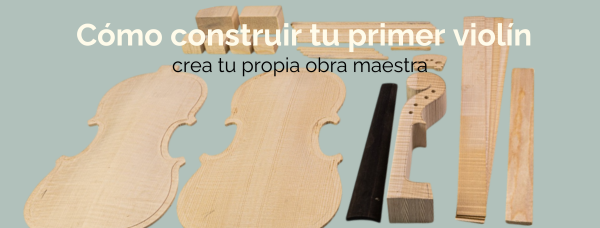
How to build your first violin
Building a violin is an exciting journey that blends creativity, skill, and patience. However, taking the first step into lutherie can be challenging, especially when it comes to selecting the right woods and setting up a fully equipped workshop. At Maderas Barber, we understand these difficulties and want to offer you some tips to simplify the process and ensure professional-quality results.
