- News
- 60 likes
- 1703 views
- 0 comments

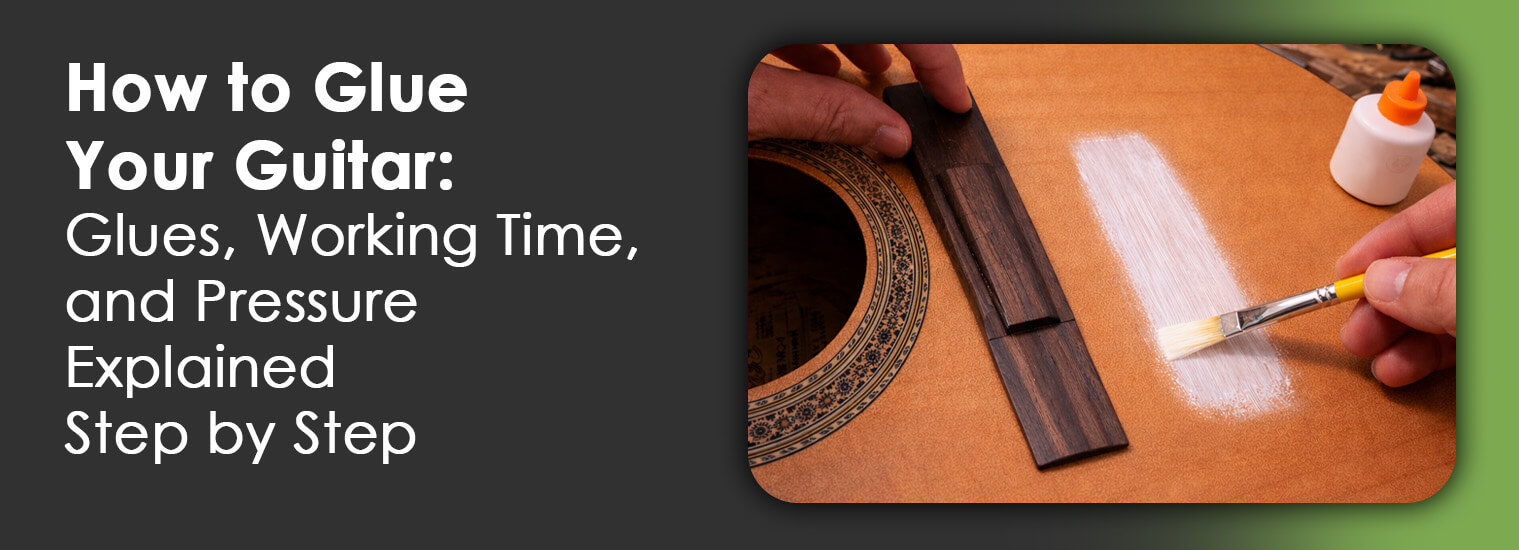
Gluing Guide for Building Your Guitar
Picking the right glue is one of the first real decisions you make as a luthier, and it can impact how easy the guitar is to repair, how strong the joints are, and even how it sounds. Every glue has its place—the trick is knowing which one to use for each joint, wood, and situation in your workshop. When it comes to string instruments, you’ll mainly work with four types of adhesives:
1. Types of Glues in Lutherie
1.1 Hide Glue (Hot Hide Glue — HHG)
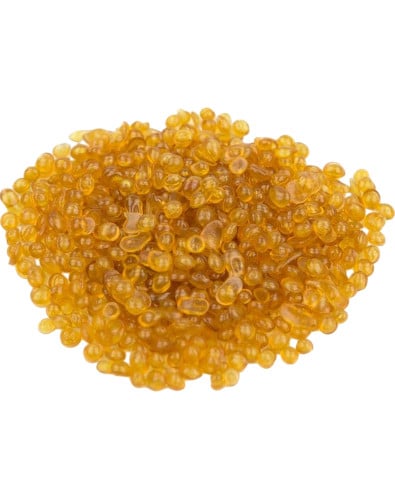
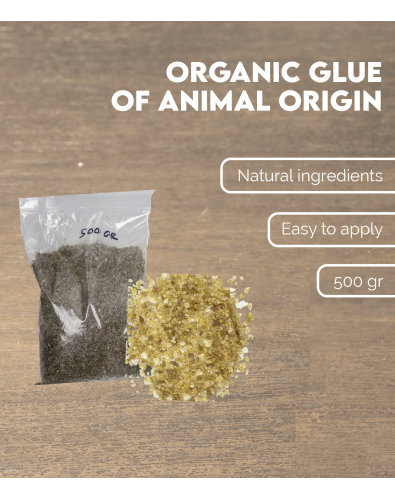
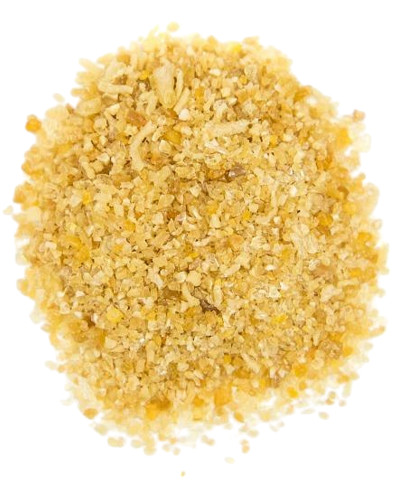
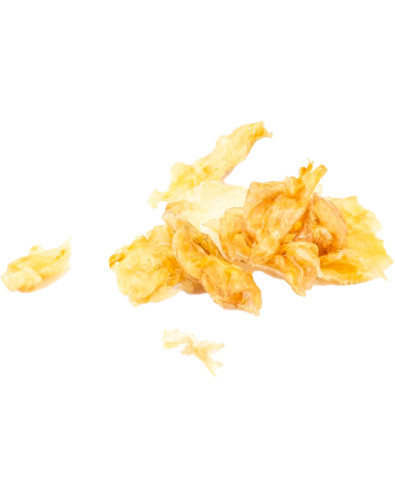
This is the classic glue in lutherie, used for centuries on all kinds of string instruments. It’s made from collagen from animal hides and bones, comes in granules rated by gram strength, and is always used hot, around 55–60 °C.
The most common gram strength is 192 g. Higher gram strength means stronger glue and a shorter working time. To prepare it, you soak it in cold water at about a 1:1.5–2 ratio by weight for at least an hour, then heat it gently in a water bath, keeping it below 65 °C. Never let it boil.
| Advantages | Limitations |
|---|---|
| Reversible with heat and steam. Enables future repairs without damaging the wood. | Open time of 30–45 seconds. Requires impeccable preparation and a mandatory dry run. |
| No creep: does not yield under sustained tension. A bridge glued with HHG holds for decades. | Requires specific equipment: a double boiler, thermometer and brush. |
| Cures very hard, improving vibration transmission compared to more elastic adhesives. | Does not work well below 18 °C: gels before the joint closes. |
| As it contracts on cooling, it pulls the pieces together and helps close the joint on its own. | Real learning curve. Practice on test pieces before using it on final parts. |
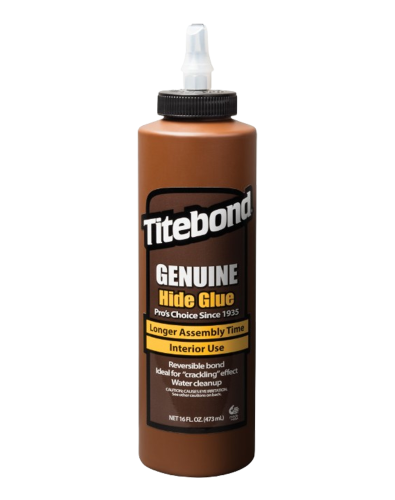
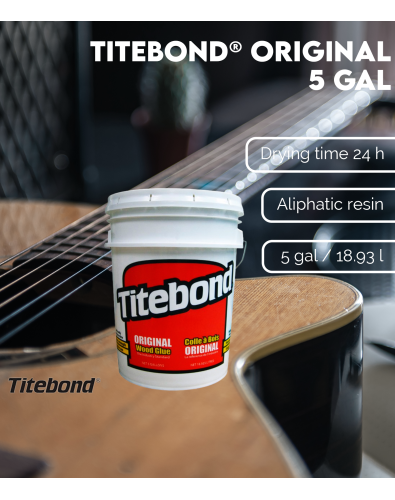
1.2 Aliphatic Glue (Titebond Original)
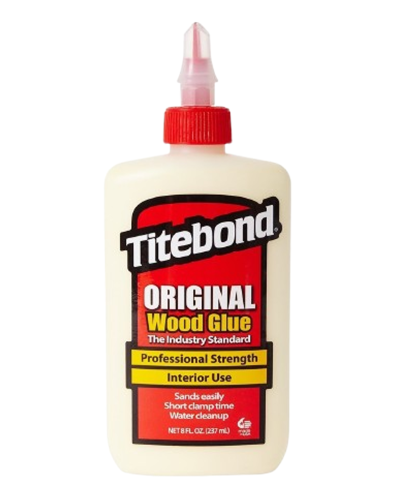
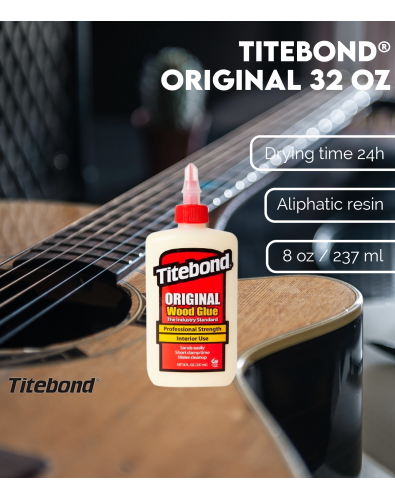
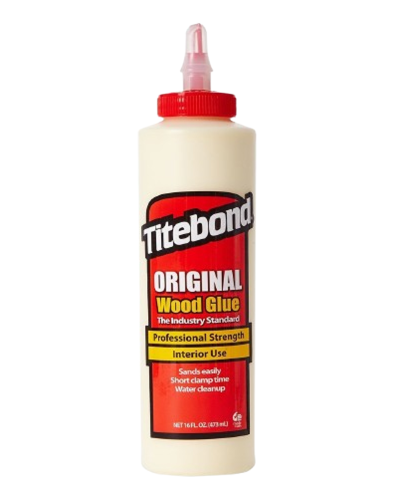
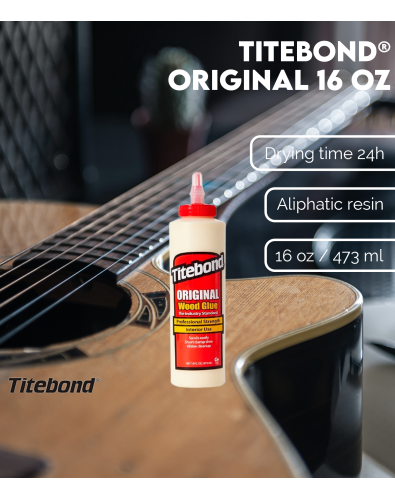
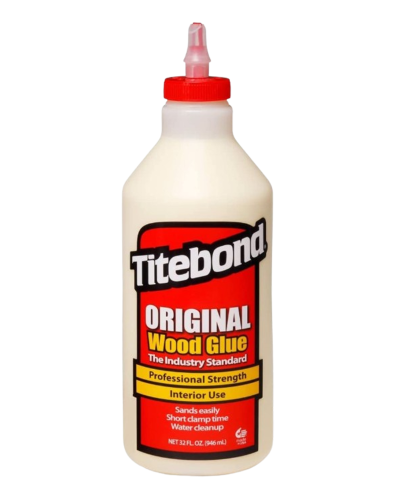
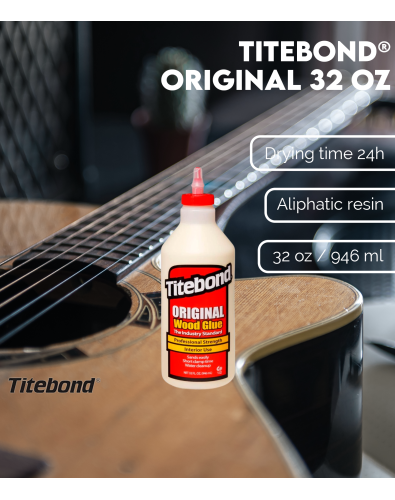
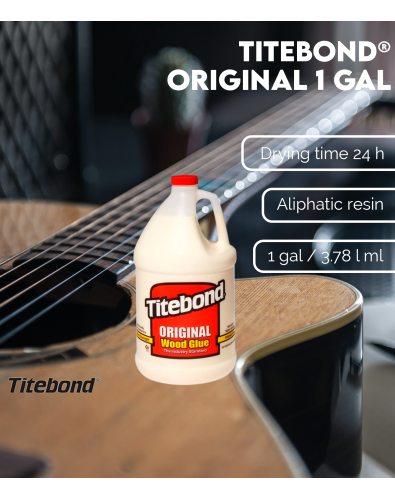
This is the go-to glue for most modern luthiers. Titebond Original, made by Franklin International, is basically the industry standard: about 4–5 minutes of working time, easy cleanup with water, cures in 24 hours, and creates a bond that’s often stronger than the wood itself.
| Advantages | Limitations |
|---|---|
| Generous working time to position, adjust and clamp without rushing. | Can creep (slow cold flow) in joints under sustained tension at high temperatures. |
| No special equipment needed. Applied directly from the bottle. | Sensitive to temperature: above 45–50 °C it may soften and lose strength in the joint. |
| Reversible with hot water and steam, though with more effort than HHG. | |
| Cures hard. The cured glue line is stronger than the surrounding wood. |
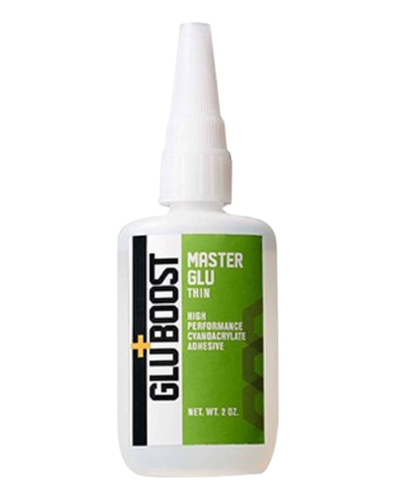
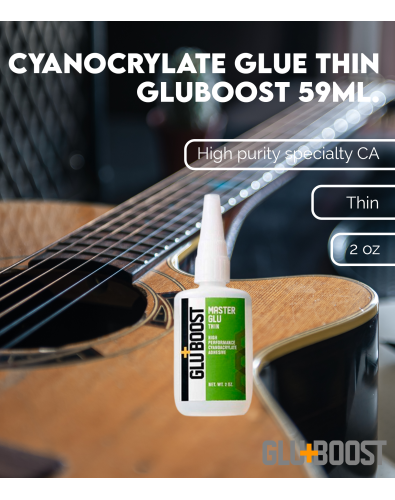
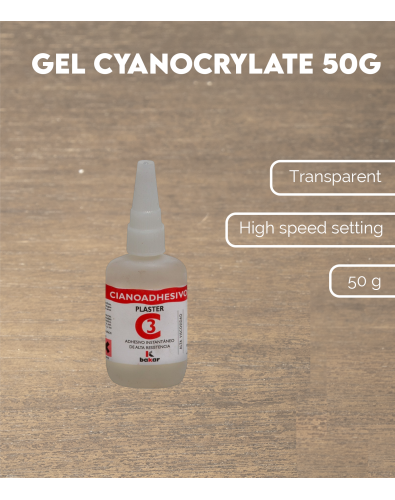
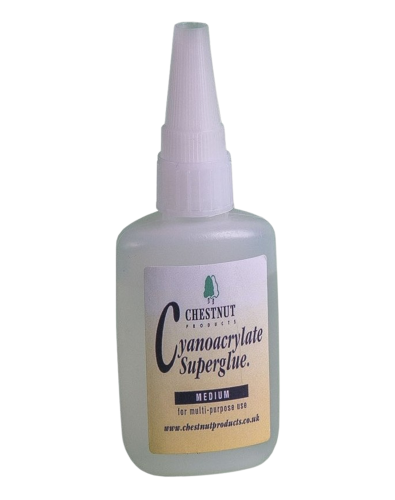
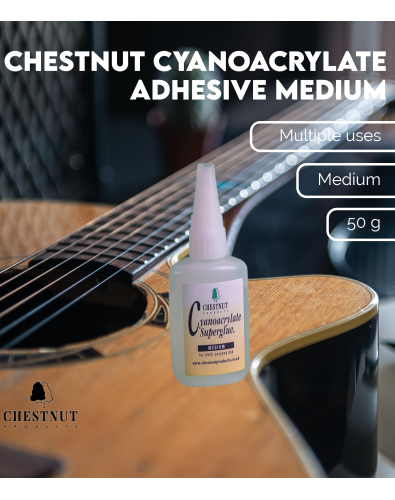
1.3 Cyanoacrylate (CA)
CA glue isn’t meant to be a structural adhesive in lutherie. It’s for very specific jobs where speed matters more than long-term strength.
When to use it:
- Rosette and purfling work: a drop of super-thin CA seeps into the joint on its own and sets without clamping.
- Plastic binding (ABS): regular wood glue doesn’t stick well to plastic.
- Quick repairs: filling small cracks with CA mixed with wood dust, or re-gluing a loose brace from inside the body using a syringe.
| Advantages | Limitations |
|---|---|
| Near-instant cure: ideal when clamping is not possible or time is critical. | Brittle under lateral impact and sustained vibration. Not suitable for structural joints. |
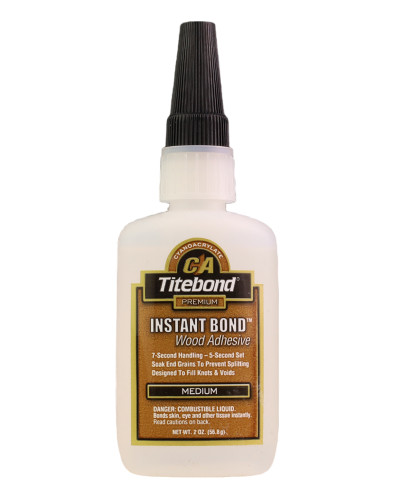
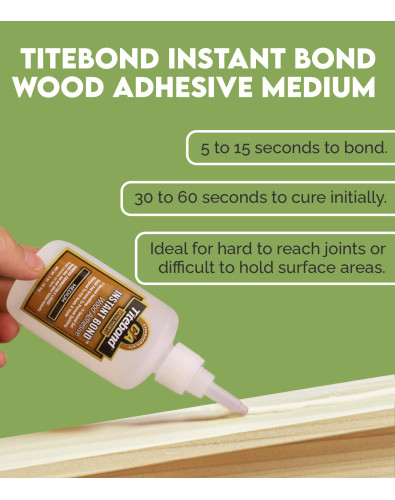
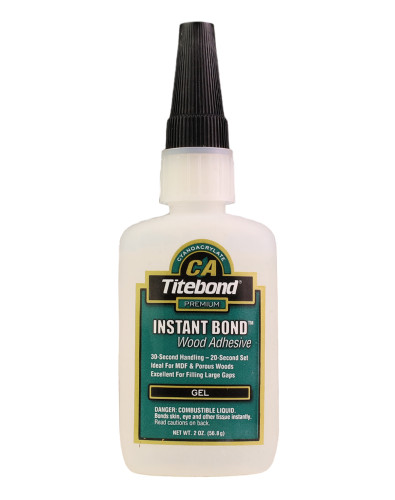
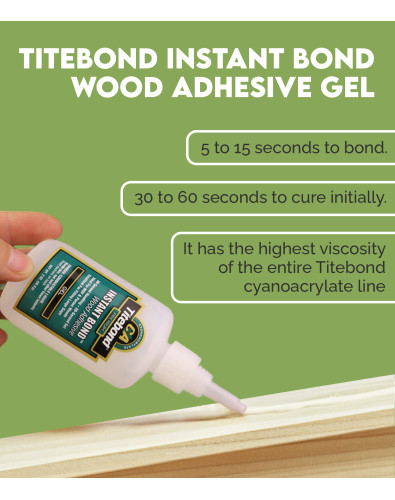
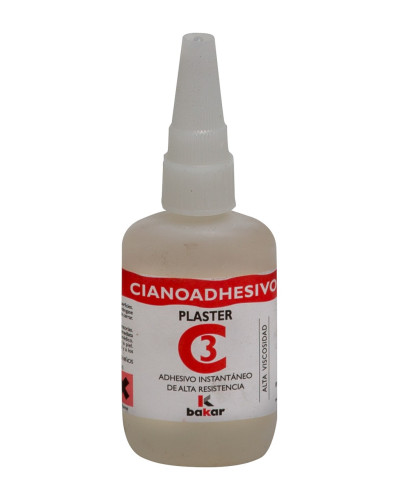
| Available in different viscosities (thin, medium, thick) adaptable to the material and joint type. | Practically irreversible: very difficult to undo without damaging the wood. |
| Bonds materials that aliphatic glue cannot: plastic, mother of pearl, bone, metal. | Can create surface stress in porous woods if applied in excess. |
| Fills and hardens mixed with wood dust to repair small cracks before finishing. | Curing fumes can whiten surrounding finish if the work area is not well ventilated. |
⚠ Incorrect uses of CA
Never use cyanoacrylate for the bridge, top or back joints, the neck, or the fingerboard. The bond is brittle under impact and nearly irreversible.
1.4 Polyurethane Glue
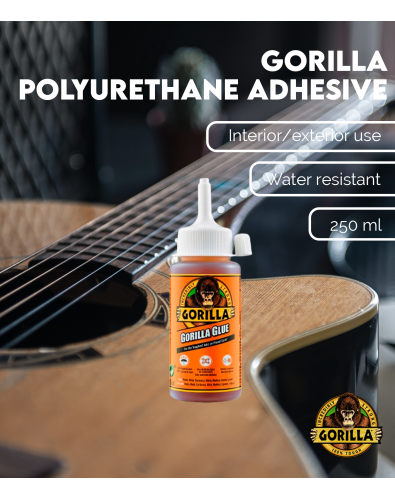
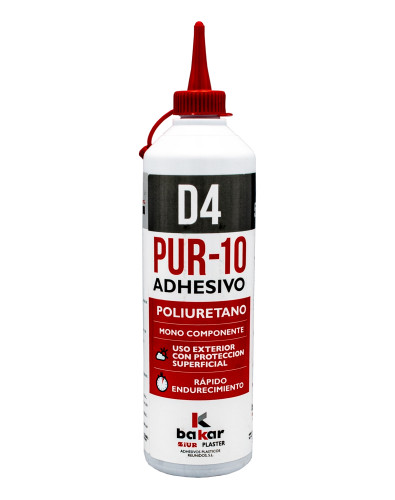
This is a one-part glue that cures by reacting with moisture in the air or in the wood. It’s water-resistant, sticks to more than just wood, and does a good job filling small gaps. In lutherie, you use it when you need something more versatile than standard wood glue.
| Advantages | Limitations |
|---|---|
| Resistant to water and humidity: suitable for instruments exposed to variable climate conditions. | Expands on curing, forming foam. If the joint is not well clamped, expansion can shift pieces or create a porous, weak glue line. |
| Bonds wood, metal, plastic and other materials: useful in joints involving different materials. | Practically irreversible. A joint bonded with polyurethane is very hard to undo without damaging the wood. |
| Good gap-filling ability: suitable when surfaces do not fit perfectly. | Requires lightly dampening one surface before application to activate curing. |
| Longer open time than aliphatic glue, giving more margin for complex operations. | Excess cleanup is difficult once cured: foam must be removed before it hardens. |
1.5 Comparison Table
| Adhesive | Open time | Clamp time | Reversible | Creep | Best for |
|---|---|---|---|---|---|
| HHG 192g | 30–45 sec | 20–30 min | Yes (heat/steam) | No | Bridge, top braces, classical/archtop joints |
| Titebond Original | 4–5 min | 45–60 min | Yes (steam/water) | Possible | Box closing, neck, kerfing, fretboard |
| Thin CA | < 10 sec | 2–5 min | No | No | Rosette, plastic binding, spot repairs |
| Polyurethane | 15–30 min | 1–2 h | No | No | Mixed wood-metal joints, uneven surfaces |
2. Open Time and Clamping Pressure.
2.1 Open Time
Open time is basically the time you have from applying the glue to getting the joint closed and clamped. Once that window passes, the glue starts setting, and any movement will weaken the joint.
| Adhesive | Open time | Factors that reduce it | Factors that extend it |
|---|---|---|---|
| HHG 192g | 30–45 sec | Low temperature, cold wood, high gram strength | Pre-warmed wood, more diluted glue, gram strength 135–150g |
| Titebond Original | 4–5 min | High temperature (>24 °C), low humidity, thick application | Cool temperature (18–20 °C), moderate humidity |
| Thin CA | 5–15 sec | High humidity, porous surfaces | Non-porous surfaces, low humidity |
| Polyurethane | 15–30 min | High temperature, very dry surfaces | Lightly dampened surfaces, cool temperature |
✔ With HHG: always warm up the wood first
Using a hair dryer on low to preheat the surfaces before applying the glue can double your working time—from about 20 seconds to 45 seconds. In a shop at around 18 °C, this trick is what really makes HHG usable.
2.2 Clamping Pressure
In lutherie, more pressure doesn’t mean a better joint. You’re not trying to crush the wood—you just want full, even contact between the surfaces. The key sign you’ve got it right is the squeeze-out: a thin, continuous line of glue all around the joint.
| Signal | Meaning | Action |
|---|---|---|
| Thin, even glue line around the joint | Correct pressure, full contact | Wipe excess with a damp cloth. Leave it alone. |
| No glue visible at any point | Insufficient pressure or poorly fitted joint | Increase pressure or check the fit before the glue cures. |
| Glue coming out in large amounts | Excessive pressure: the glue line has been starved | Reduce pressure. A starved joint is weak. |
| Glue coming out only on one side | Uneven pressure or non-flat surfaces | Reposition clamps or check the fit of the pieces. |
Pressure guidelines by clamping method:
- Go-bar deck: use 2–3 rods per brace on small builds, 4–5 on longer ones. The rods should bend a bit—you want visible flex.
- Screw clamps: tighten until you see glue coming out, then give it another quarter turn. No need to overdo it.
Packing tape: keep the tension even and moderate. Add a strip every 5–7 cm around the body. - Packing tape: keep the tension even and moderate. Add a strip every 5–7 cm around the body.
- Kerfing clips: just enough pressure to hold contact. Wooden clips are more than enough.
- Rub joint (HHG): rub the pieces together for 20–30 seconds to push out excess glue—no clamps needed, but only works if the fit is perfect.
2.3. Clamping Time and Full Cure
There are two different moments to keep in mind: the minimum clamping time (when you can safely take the clamps off) and the full cure (when the joint is at full strength). If you start working the piece too early, you’ll weaken the joint.
| Adhesive | Min. clamp time | Full cure | Note |
|---|---|---|---|
| HHG 192g | 20–30 min | 12 h | Do not stress the joint for 12 h. Heat or moisture can reactivate it earlier. |
| Titebond Original | 45–60 min | 24 h | Full strength at 24 h. Handle with care after 1 h. |
| Thin CA | 5 min | 1 h | Reaches strength quickly, but brittle under lateral impact. |
| Polyurethane | 1–2 h | 24 h | Remove excess foam before it hardens. Do not move pieces during cure. |
⚠ Temperature and curing of Titebond Original
Titebond Original won’t cure properly below 10 °C. Between 10 °C and 15 °C, it may look dry, but the joint is still weak. Always work above 15 °C—ideally between 18 °C and 24 °C.
3. Foundations of Gluing
3.1 Workshop Conditions
Wood is hygroscopic—it takes in and releases moisture depending on the environment, and it moves because of it. If you glue in the wrong conditions, you’re building in stress that can show up months later: loose braces, binding coming off, or a warped top.
| Parameter | Ideal range | What happens outside the range |
|---|---|---|
| Temperature | 18–24 °C | Below 15 °C, Titebond does not cure properly. With HHG, the glue gels before the joint closes. |
| Relative humidity (RH) | 45–55 % | Below 40 %, the wood shrinks during curing and may open joints. Above 65 %, the wood swells and joints will work against each other once it dries. |
To keep things under control, use a digital thermo-hygrometer with a capacitive sensor. It’s accurate enough (±2–3% RH) for workshop use. Ideally, it should be easy to read from your bench, allow manual calibration, and track max/min values if your conditions change a lot.
Set it at bench height, away from windows or direct heat, and check it every time before you start gluing.
3.2 Surface Prep
A good glue joint starts with good surfaces. Before you apply any glue, always check:
- Flat and tight-fitting surfaces. For tops and backs, use backlighting—no light should come through anywhere.
- Clean and dust-free. A quick blast of compressed air or a dry cloth does the job.
- No grease or oil. With oily woods like Indian rosewood (Dalbergia latifolia) or ziricote, wipe with acetone and let it fully evaporate before gluing.
- No finish residue. Any leftover varnish or wax will stop the glue from bonding properly.
- Right level of roughness. If it’s too smooth, glue won’t penetrate well. A sharp planed surface or 150–180 grit sanding works best for most joints.
3.3 Dry run
A dry run is a complete rehearsal of the entire gluing operation without applying any adhesive. It consists of simulating the process step by step—positioning, clamping setup, alignment checks, and cleanup—exactly as it would be done during the actual glue-up, but without glue. Its purpose is to identify problems before the adhesive is active and there is no time to correct them.
With HHG, you have 30–45 seconds of open time. Without a prior dry run, this is not enough to position the parts, adjust the clamps, and verify alignment. Once the dry run is done, you only need to execute what you have already practiced.
Dry run steps:
- Place all parts in their final position.
- Set up clamps, tensioners, or go-bars in the correct position and mark them if needed.
- Check that there are no visible gaps anywhere along the joint.
- Time the full operation to make sure it fits within the open time of the chosen adhesive.
- Prepare a damp cloth, a plastic scraper, and an inspection light before applying glue.
✔ The dry run is what saves you from the most mistakes
Experienced luthiers do it on every critical joint, no matter how many times they’ve done it before. It’s not just for beginners—it’s part of the workflow.
4. The 10 Most Common Mistakes
Most gluing failures are not caused by the adhesive itself, but by poor preparation, unsuitable workshop conditions, or rushing the process.
| # | Mistake | Consequence | Solution |
|---|---|---|---|
| 1 | Gluing without a dry run | Wrong position with active glue and no time to correct | Dry run required for every critical joint |
| 2 | HHG too cold or too old | False joint: seems bonded but is actually weak | Fresh glue, 55–60 °C, consistency of thin honey |
| 3 | Too much glue in the joint | Thick glue line = mechanically weaker joint | Thin coat: moderate squeeze-out is the correct signal |
| 4 | Excessive clamp pressure | Crushed wood, starved glue line | Contact pressure, not maximum compression |
| 5 | No interior support when clamping the bridge | Clamp pressure concentrates on the top and can crack it from inside | Always place a softwood block through the soundhole, resting on the interior braces |
| 6 | Gluing with relative humidity out of range | Wood moves during curing; joints develop internal tensions that open over time | Check the hygrometer before every gluing session |
| 7 | Tuning up before 24 h (bridge) | Bridge comes off at first tuning | Minimum 24 h full cure before applying string tension |
| 8 | Using Titebond II or III for the bridge | Risk of creep under sustained tension over time | Only Titebond Original or HHG for the bridge |
| 9 | Oily surface not cleaned | Glue does not penetrate: apparent bond without real adhesion | Acetone on oily woods, let evaporate 15 min before gluing |
| 10 | Not pre-warming the top before applying HHG | Glue gels before the brace or piece is seated | Always pre-warm with a hair dryer on low before applying HHG |
5. Fixing Problems on the Spot
Gap showing in a joint
If you spot a gap before the glue sets: with Titebond Original, slip in a thin spatula, add more glue with a fine syringe, and clamp it again right away. With HHG, warm the area gently (about 60 cm away), reactivate the glue, add fresh glue, and clamp again.
Bridge shifted while clamping
This is super common with Titebond Original before it grabs. To avoid it, tack the bridge in place with a couple of tiny CA drops or use alignment pins. If it already moved and the glue is still wet, act fast (under 2 minutes): take it off, clean with warm water, and redo it. If it’s already cured wrong, use gentle steam to soften the glue before fixing it.
Loose brace (buzz inside the guitar)
A loose brace will cause buzzing on certain notes. To find it, tap the top lightly while listening closely. Use a mirror and a light to spot the gap. To fix it without opening the guitar, inject very thin CA into the gap with a syringe and press it for about 5 minutes. The glue will flow in and fix it without taking anything apart.
Fingerboard end lifting
The end of the fingerboard over the top can lift over time from string tension, especially if it wasn’t glued well. Inject diluted HHG or thin CA underneath and clamp it with a caul and cork for about 30 minutes. If it’s badly lifted, warm the area gently with an iron over tissue paper first to soften the old glue before adding new glue.
6. Quick Reference Table
Print this page and keep it in your workshop.
| Joint | 1st choice glue | Alternative | Clamp time | Full cure | Clamping system |
|---|---|---|---|---|---|
| Top centre joint (spruce/cedar) | HHG 192g | Titebond Original | 20–30 min | 12 h | Wedges / tape / rub joint |
| Back centre joint | Titebond Original | HHG 192g | 45 min | 12 h | Wedges / tape |
| Kerfing / interior reinforcements | Titebond Original | HHG | 30 min | 12 h | 40–60 spring clamps |
| Top braces | HHG 192g | Titebond Original | 20–30 min | 24 h | Go-bar deck |
| Back braces | Titebond Original | HHG | 45 min | 24 h | Go-bar deck |
| Top closing (guitar) | Titebond Original | HHG (advanced) | 60 min | 24 h | Tape / rubber bands |
| Box closing (violin / cello) | HHG 192g | — | 30 min | 24 h | Luthier clamps + wedges |
| Neck to block / dovetail | HHG or Titebond Orig. | — | 30–60 min | 24 h | Long-reach clamp |
| Fretboard (guitar) | Titebond Original | HHG | 60 min | 12–24 h | Clamps + cork cauls |
| Fretboard (violin / viola / cello) | HHG 192g | — | 30 min | 12 h | Clamps + cauls |
| Bridge (guitar / lute / ukulele) | HHG 192g | Titebond Original | 30–60 min | 24 h | Clamp + interior caul |
| Wood binding | Titebond Original | Medium CA | 20 min | 2 h | Packing tape |
| Plastic binding (ABS) | Thin CA | — | 5 min | 1 h | Packing tape |
| Rosette / purfling | Thin CA | Titebond diluted 10% | 5–10 min | 1 h | Tape / hand pressure |
At Maderas Barber, we have spent years working with luthiers of all levels. We know that the first questions about gluing always arise at the least convenient moment—when the glue is already applied and the clamps are in your hands. That is why we have gathered here everything you need to know before reaching that point. If you have any questions about materials, adhesives, or any aspect of instrument building, we are here to help.