- News
- 0 likes
- 2316 views
- 0 comments

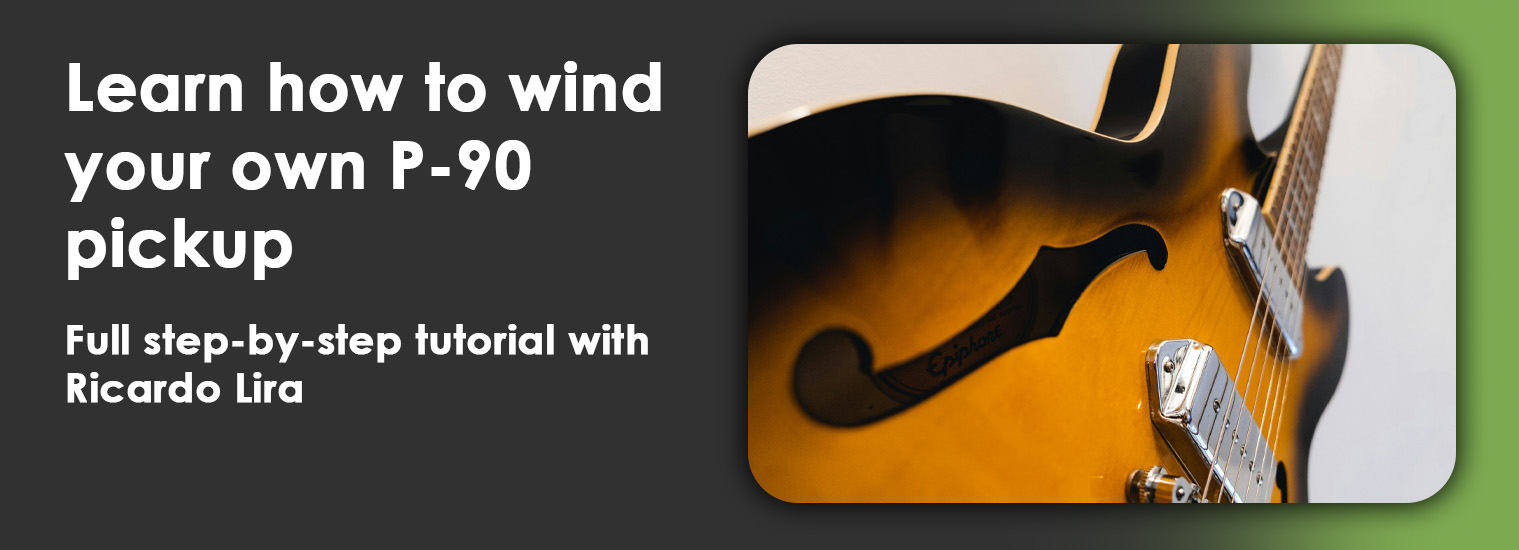
How to Wind Your Own P-90 Pickup
Full Guide with Ricardo Lira
Learn step by step how to wind a P-90 pickup from scratch, discover its history, and explore the new Maderas Barber kits for electric guitars and basses.
A Tone That Shaped Generations
The P-90 was born in 1946 as Gibson’s answer to the demand for a fuller, punchier single-coil than the 1930s design. Its wide, flat coil delivers a unique character: rich mids, rounded highs, and a slight growl that responds beautifully to pick dynamics. Artists as diverse as Carlos Santana (Lotus era), Pete Townshend (The Who), or Billie Joe Armstrong (Green Day) have relied on these features to shape their guitar tone.
Anatomy of a Classic P-90
- AWG 42 / 43 enameled wire: around 9,000 turns per coil produce the characteristic 7.5–8.0 kΩ output.
- Alnico V bar magnets: placed beneath each steel pole for a strong, balanced magnetic field.
- Vulcanized fiber flatwork: lightweight and stable, maintaining the coil’s shape.
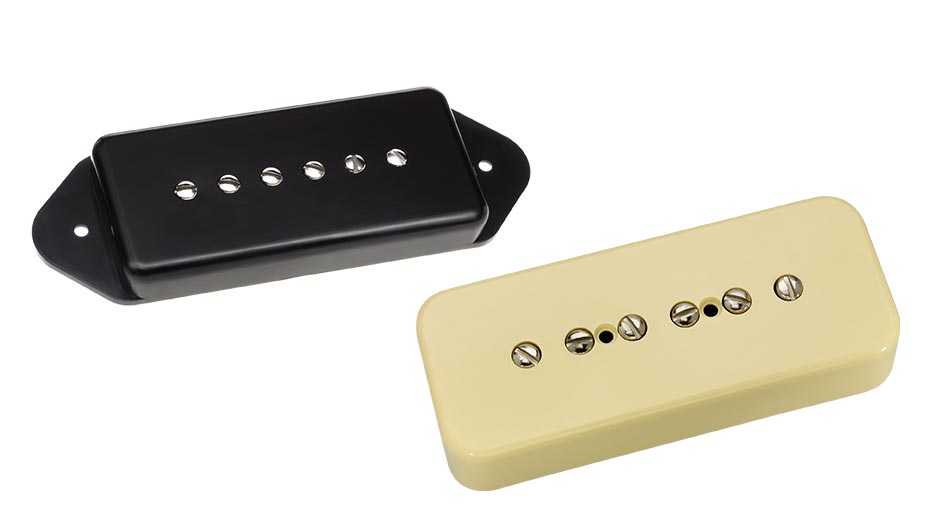
- “Soapbar” or “Dog-Ear” covers: two classic styles for different guitars.

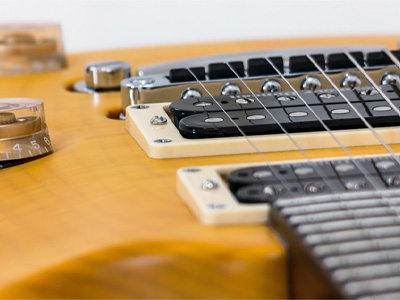
Image: Future Publishing, via Guitar World

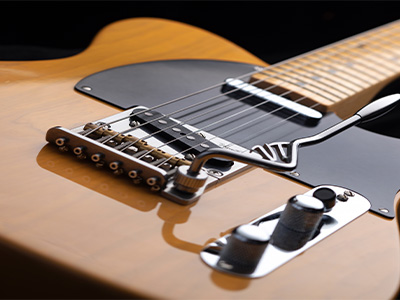
Image posted by @muerdekeroyo on X. Source: https://x.com/

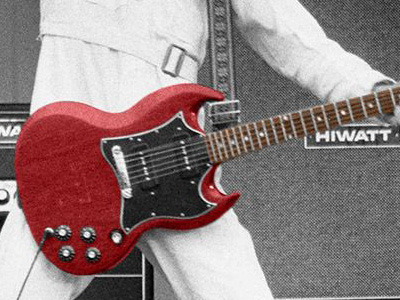
Image: DiMarzio, via DShowMusic.com
Luthiers reviews
Step-by-Step Video Tutorial
In this tutorial with luthier Ricardo Lira, you’ll see
- Setup of the winding station and lower plate installation
- Turn counter and tension adjustment
- Even winding technique to avoid air gaps
- Potting with wax to reduce microphonics
- Soldering and DC resistance measurement
Quick tip: always note the DC resistance and magnet orientation; your future self will appreciate it when adjusting polarities in an HSS or P-90 + humbucker setup.
What’s Included in the Maderas Barber P-90 Kit?
Each kit contains everything needed to make a 50 mm soapbar pad:
- CNC-cut base plate and 50 mm spacer (nickel-silver)
- Pre-molded coil
- Two Alnico 5 magnets and six 18.5 mm adjustable steel pole screws
- Black soapbar-style cover, mounting screws, springs
- Premium wire: 1 m of black and white 22 AWG plus 40 cm shielded cloth cable
- Two 2 mm solder eyelets
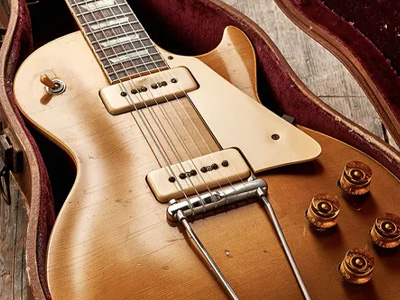
With these components you reproduce the traditional construction devised by Walter Fuller and maintain the iconic “soapbar” aesthetic of the 1952 Les Paul Goldtop.
Recommended Tools and Supplies
For the winding process, Ricardo uses some tools that simplify the work and improve consistency:
- Pickup winder with turn counter and tension control
- AWG 42 copper wire (spools from 500 g)
- Cloth tape to insulate the coil and avoid microphonies.
- Magnetic polarity tester to align poles in multiple configurations.
- Tin soldering iron and good alloy tin.
- Voltmeter or digital multimeter to check DC resistance.
All these accessories are available in our store and linked at the end of the article.
Famous Variations in Iconic Guitars
- Gibson Les Paul Goldtop 1952–56: the P-90 brings extra articulation to the mahogany body and maple top.
- Gibson Les Paul Junior and Special: a single dog-ear screwed directly to the wood for maximum tonal transfer.
- Gibson SG Special: sharp sharpness combined with the fast attack of the SG.
- Epiphone Casino / Gibson ES‑330: air and resonance thanks to the hollow box.
Customize Your Pickup
- Number of turns: fewer = brighter; more = higher output
- Magnet type: Alnico II = softer highs; Alnico V = more punch
- Pots: 500 kΩ = clarity; 250 kΩ = vintage warmth
- Tone cap: 0.022 µF is classic; 0.047 µF gives deeper sweep
Other Kits Available
In addition to the P-90 kit, at Maderas Barber you will find:
- PAF-style Humbucker: warmth, dynamics and the characteristic 1950s hum cancellation.
- Classic Telecaster (bridge): “twang” cristalino con placa base de acero.
- ’52 Stratocaster: low-output bright single-coil, perfect for vintage styles.
- Precision Bass split pickup: punchy bass and defined mids, ideal for rock and funk.
Each kit includes pre-made coils, calibrated magnets, hardware, connection wire and detailed manual. All you need to bring is patience and your hands.
Building your own pickup is more than a DIY project: it's about intimately understanding how your sound is forged. Take the leap and visit maderasbarber.com to get your kit, tell us in the comments how your new P-90 sounds and share photos of your finished guitar!