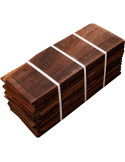
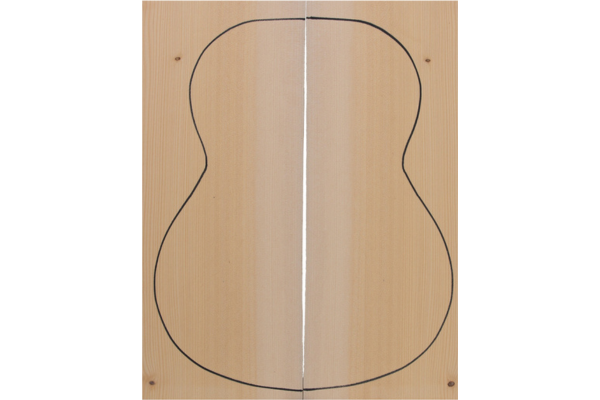
MB Exclusive, las mejores piezas de nuestro stock.

Today we’re revealing the secrets of our favorite tonewoods!

This year marks our 68th anniversary sharing our passion for wood with luthiers, artisans, and craft lovers around the world. To celebrate, we don’t just want to talk about species and properties — we want to share what we’ve learned. Because each of these woods has taught us something. Some spoke to us about patience, others about adaptability, aesthetics, or listening. And all of them, without exception, have shaped us into who we are today.

The lesson behind each wood

Each of our woods has its own story. From European Spruce, which revealed the value of patience, to Cypress, which showed us the power of unique identity. Each one has shaped us and helped us grow in our craft.

European Spruce: the art of waiting

Did you know that altitude can change the way a wood sounds?

Take European spruce, which grows in the Alps at over 1,000 meters. Winters there are long. Oxygen is scarce. Atmospheric pressure is low.

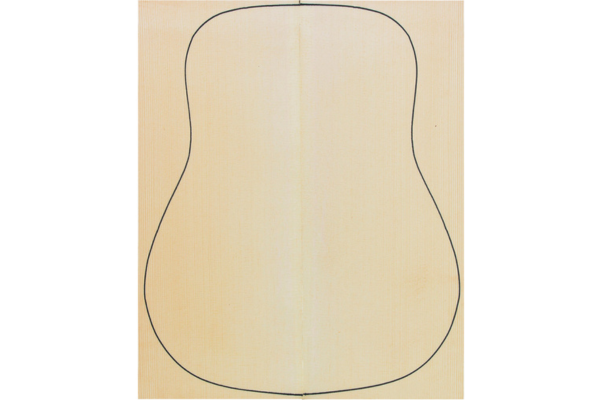
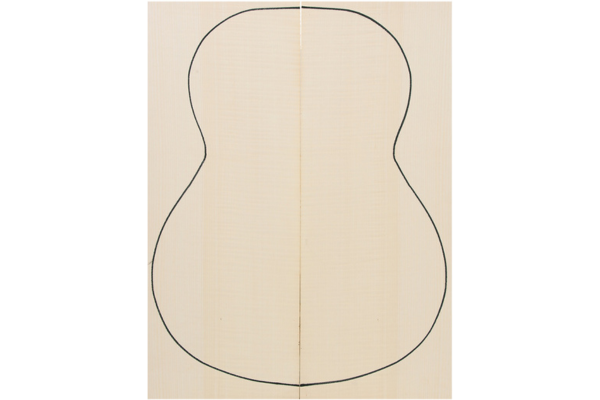
This makes the tree grow much slower. Ring by ring, its core becomes denser and more consistent — as if the mountain itself were training it to resonate better. That’s why Picea abies is the queen of soundboards. Not by chance, but by science: its stiffness-to-weight ratio borders on perfection. With a modulus of elasticity around 11,000 MPa and a density rarely over 450 kg/m³, it vibrates fast and clean without unnecessary weight.

It demands precision in cutting and extreme care in drying. Done right, it yields a lively soundboard, one that responds clearly to every attack. It’s a wood that "speaks" when allowed to speak. From Stradivari to modern luthiers, its authority is undisputed. It taught us to wait. To scrutinize each growth ring. To trust time and the ear. Because when it comes to the soul of the instrument, patience sounds better.

Indian Rosewood: adaptability in wood form

Rosewood is never easy. Never was — not to work with, and not to move across borders.

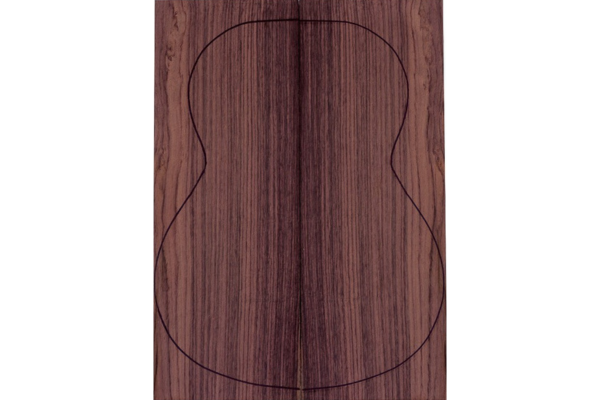
For years, it was the standard for concert guitars. Rich in overtones, dense (800–900 kg/m³), and stable enough to build without fear. It has a high speed of sound transmission and closed pores that minimize surprises during finishing.

But its beauty attracted too much attention. Restrictions came. Paperwork, customs, CITES — the rules changed. We had to adapt. To trace each piece. To realize that legality is part of the craft too.

In the workshop, rosewood remained the same: deep, noble, aromatic. Every pass of the plane revealing unique grain patterns, like the fingerprints of a distant forest. It requires sharp tools and patience, as its hardness can wear down even the most meticulous hands.

It taught us that quality is also commitment. And that defending a wood doesn't mean clinging to it — it means taking care of it.

Curly Maple: a sound you can see

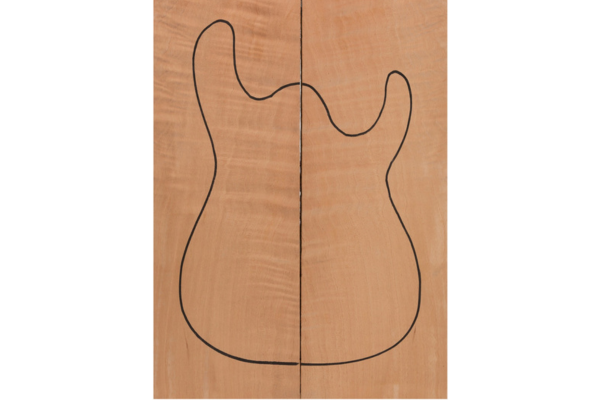
Some woods you hear. Others you see first. Flamed maple is like that: visual, tactile, almost sculptural.

Its figure comes from internal tension during growth. With medium density (600–670 kg/m³) and a high modulus of elasticity (~11,500 MPa), it's perfect for backs, sides, and necks. It reflects light like few materials and adds crisp attack to the tone, especially in violins and violas.

But it must be read properly. Not all figure guarantees acoustic quality. Symmetry, flame direction, and cut consistency — it all matters. Between spectacular grain and weak structure, sometimes there's only a millimeter of difference.

It taught us to look beyond the obvious. To seek symmetry, depth, intention. Because in luthiery, the visual also resonates.

Ebony: the value of using everything

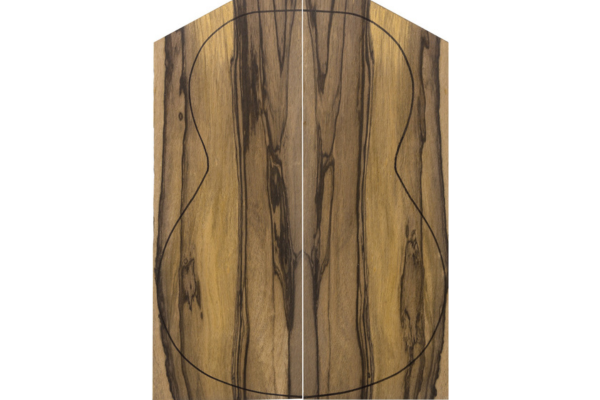
Ebony doesn’t forgive. Dense, hard, closed. More than 900 kg/m³ of pure demand. It’s the wood of fine details — where the margin for error is in tenths of a millimeter.

Sourced from Cameroon, we control the entire chain: from our sawmill to your hands. Each piece is hand-inspected. What isn’t fit for a fingerboard becomes something smaller — ebony is sought-after in every craft.

It taught us to shift our perspective. That pure black isn't the only form of beauty. That a lighter streak can be an aesthetic choice. That what was once discarded can now tell a different story.

And it reminded us that perfection isn’t always uniform. Sometimes, it’s honest.

Honduran Cedar: stability in luthiery

Some woods appeal to the ear. Others announce themselves in the air. Red cedar is one of those: open the box and feel the warm, spicy aroma filling the workshop.

With a density between 450–550 kg/m³, it balances lightness with dimensional stability. That’s why it’s widely used for necks of classical and flamenco guitars: it not only balances weight, but also transmits vibration efficiently to the top. It resists moisture and takes varnish without bleeding.

It’s a friendly wood. Easy to carve, route, glue. And it offers predictable results, something every luthier appreciates.

It connected us to Latin America, to traditional building, to a direct, honest way of making instruments.

It taught us that what’s unseen — the neck, the sound’s spine — also deserves attention. And that the first voice of an instrument is the one the player feels in their hand.

Red Cedar: trusting the subtle

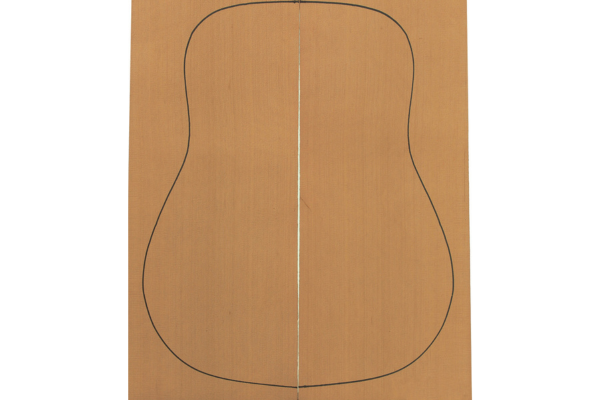
If spruce is a clear shout, Canadian cedar is a steady whisper. Light (340–400 kg/m³), fine-pored, and warm-sounding. It's a top choice for soundboards in guitars seeking quick response and dynamic nuance.

It doesn’t have spruce’s projection — true. But in studios, recordings, and small concerts, its voice holds its own in support. In sensitive hands, cedar lets the instrument react even to the softest touch.

It taught us that not every instrument wants to shine. Some prefer to suggest. And that the subtle, in expert hands, can move more than the spectacular.

Cypress: A wood with an accent

Cypress doesn’t compromise. It has its own way of sounding, behaving, even smelling. And it doesn’t care to please everyone.

With its dry, bright tone, it’s the soul of the blanca flamenco guitar. It doesn’t aim for roundness or sweetness — it wants attack, instant response, character.

Its lightness (500–600 kg/m³) enables agile, percussive guitars.

It works well, but demands clean cuts and quick gluing. Its straight grain can splinter if not treated with care. In flamenco hands, it answers fast, confidently, and precisely.

It taught us that some woods have identity. That not everything needs to be versatile or neutral. And that in instrument making, sometimes the most valuable thing is to have a voice of your own.

Maderas Barber, 68 Years of Listening

These seven woods are not just part of our catalog — they’re fundamental to our story and growth.

Each one taught us something new, challenged us to improve, and showed us that working with wood is a never-ending learning process.

Since our founding, we’ve listened carefully to each one, learning to interpret their secrets and refining our techniques.

Now, with 68 years of experience, we remain committed to the craft — respecting tradition while always seeking new ways to innovate in the field of luthiery.

Our journey is far from over: every new batch of wood is another opportunity to learn, a new challenge that keeps us moving forward.

Thanks to every wood that has accompanied us through these 68 years!

Comments (0)
No comments at this moment
Product added to wishlist
Product added to compare.