- News
- 0 likes
- 389 views
- 0 comments
Comments (0)
No comments at this moment

In lutherie, many problems are not visible while you are working the wood.
They don’t appear during planing, gluing, or even finishing the instrument.
They appear later.
When it’s already too late.
And almost always, they share the same origin: poorly dried wood.
When we talk about wood for lutherie, it’s not enough for it to be beautiful or exotic.
A piece can look perfect… until it stops being so.
Drying wood is not simply leaving it out in the air or waiting “long enough.”
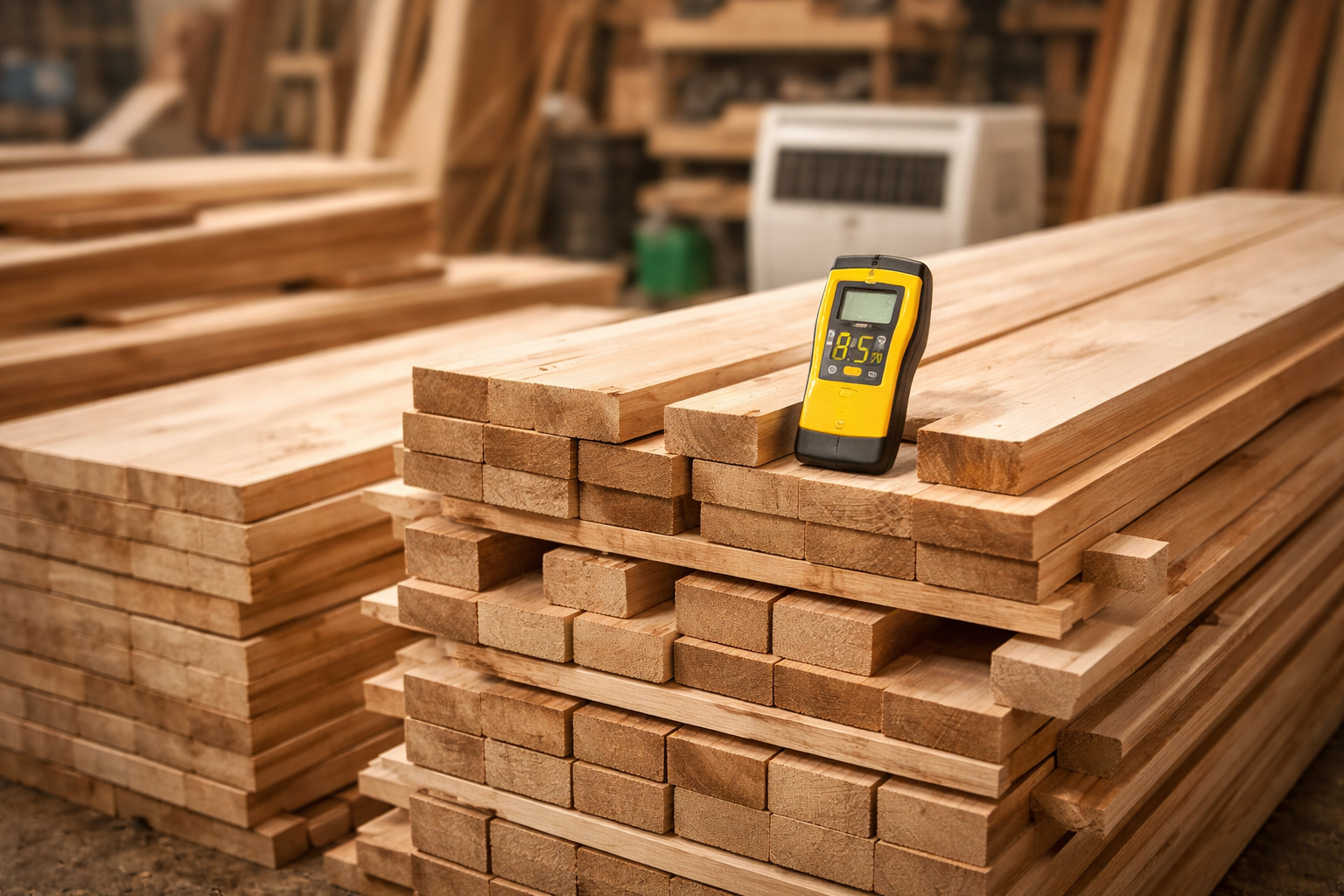
Drying is the process by which wood loses its internal moisture in a controlled way, until it reaches a stable moisture content compatible with the working environment and the instrument’s final use.
Properly dried wood:
Poorly dried wood, on the other hand, may seem fine at first.
The problem is that it gives warning signs too late.

In a musical instrument, wood is subjected to demanding conditions:
If the wood is not properly dried, the problems are not theoretical. They are real:
In lutherie, poor wood compromises the result.
But poor drying condemns that result from the very beginning.
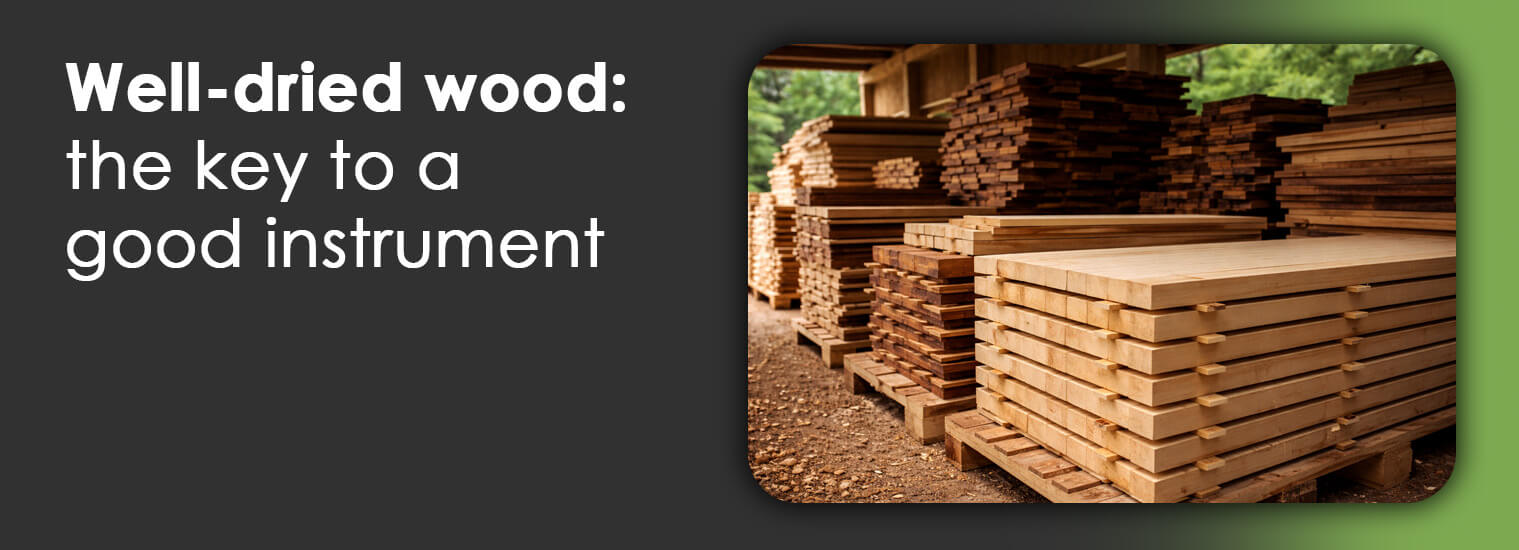
Natural drying is the traditional method that has been used for centuries in preparing wood for musical instruments.
It consists of allowing the wood to lose moisture slowly and progressively, adapting naturally to its environment.
Its main advantages are clear:
However, when high levels of precision and stability are required, natural drying has important limitations:
For this reason, in professional lutherie, natural drying is generally considered a necessary stage, but not always the final step in the process.
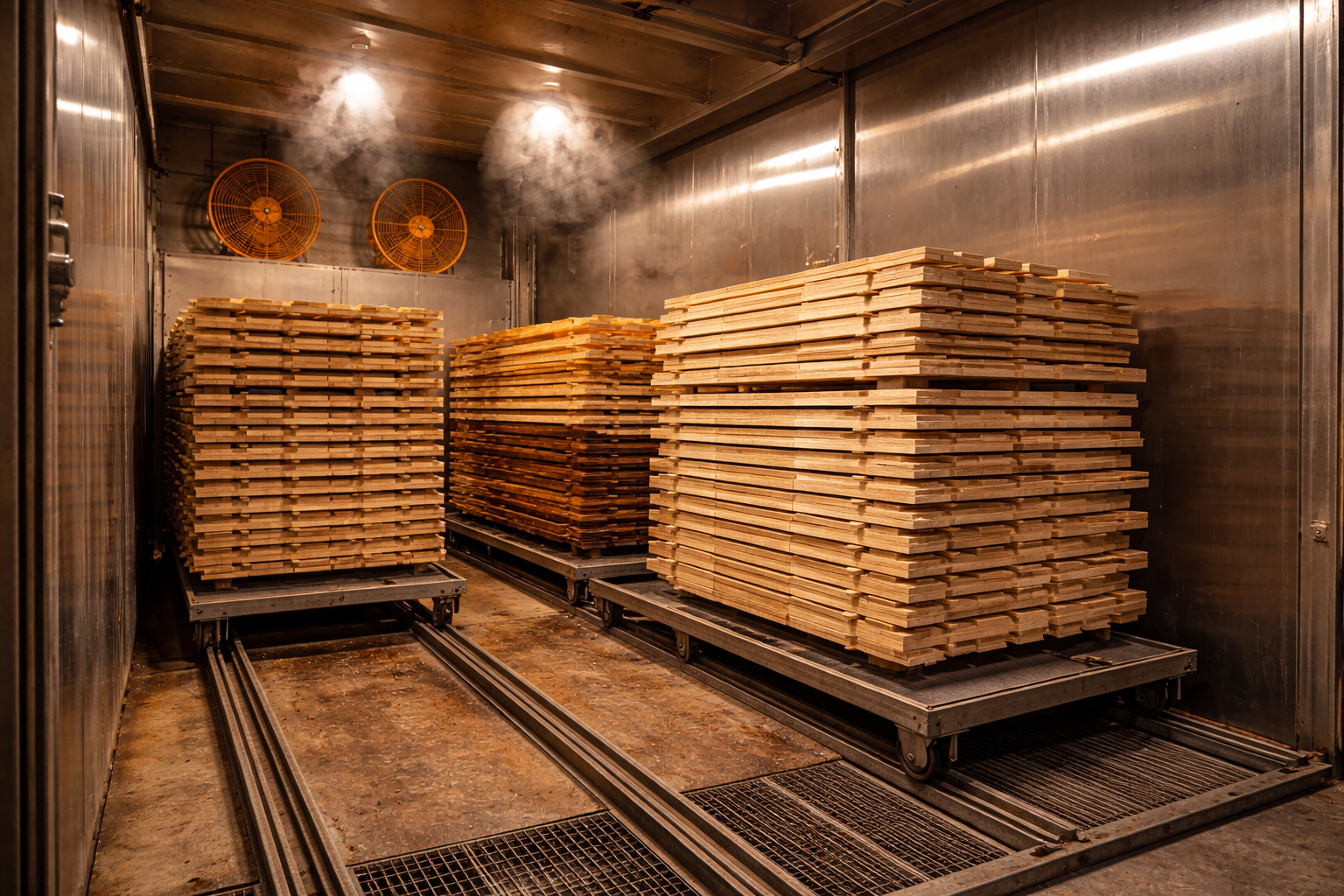
For decades, and still today in many industrial settings, wood has been dried using forced hot-air kilns, with constant air circulation.
This system allows moisture to be reduced in relatively short timeframes and works well for many general applications.
However, in lutherie, it has clear limitations.
By drying the wood mainly from the surface inward, the process is more aggressive and can lead to:
For this reason, although widely used, hot-air drying is generally not the most suitable option for woods intended for musical instruments or other critical components.

Vacuum drying is an advanced system that allows wood moisture to be reduced in a precise and uniform way, combining reduced pressure with a controlled application of heat to facilitate the extraction of internal moisture.
When properly applied, it allows:
It is especially important for dense and exotic woods, and for critical parts such as soundboards, backs, sides, or fingerboards, where any later movement can compromise the instrument.
At Maderas Barber, we understand drying as part of quality control, not as an automatic step.
We work with carefully selected woods from the very beginning, and we know that not all pieces or projects require the same level of drying.
That is why, in addition to our regular work with tonewood, we offer a vacuum drying service when a project requires it, particularly for lutherie applications where stability is essential.
Properly dried wood:
Because in lutherie, wood doesn’t just have to sound good.
It has to behave properly, today and for many years to come.
Save products on your wishlist to buy them later or share with your friends.